
The Illusion of Control: Why Watching the Chart Doesn't Change the Outcome
The trade is open. Stop is set, target is set, size was decided before you clicked buy. There is, at this exact moment, nothing left to do. And yet you're leaning toward the screen, refreshing the 1-minute chart, watching every tick like your attention is somehow part of the mechanism moving the price.
It isn't. The market has no idea you're watching. But it doesn't feel that way — and that gap between how much control you feel and how much you actually have has a name: the illusion of control.
What Is the Illusion of Control?
The illusion of control is the tendency to believe you can influence outcomes that are, in reality, governed by chance. Psychologist Ellen Langer documented the effect in her 1975 paper The Illusion of Control, published in the Journal of Personality and Social Psychology. In one of her experiments, people who picked their own lottery number valued their ticket far more, and were far more reluctant to trade it away, than people who were handed a random number — even though the odds of winning were identical either way. The act of choosing created a felt sense of influence over a process that had none.
Langer's insight was that this isn't limited to obvious games of pure chance. The illusion gets stronger whenever a task resembles one that involves real skill — familiar cues, active involvement, a sense of competition. Give people something that looks like it rewards attention and effort, and they start behaving as if attention and effort are doing something, whether or not they are.
Why Trading Is the Perfect Breeding Ground for This Bias
Nothing matches that description better than a live chart. Trading genuinely does involve skill — setup selection, risk placement, timing. So unlike a roulette wheel, there's real signal mixed into the noise, and that's exactly the trap. Once a trade is live, the skill part is already finished. What's left is randomness playing out over the next few minutes or hours, and the fact that some of your process was skill-based makes it easy to assume that watching, adjusting, and reacting in real time is more of that same skill — rather than what it actually is: a felt need for control over something that no longer responds to input.
Does Staring at the Chart Actually Change Anything?
No. Once you're in the trade, the price path is what it is regardless of whether you're watching. But the behaviors the illusion produces are real, and they cost real money:
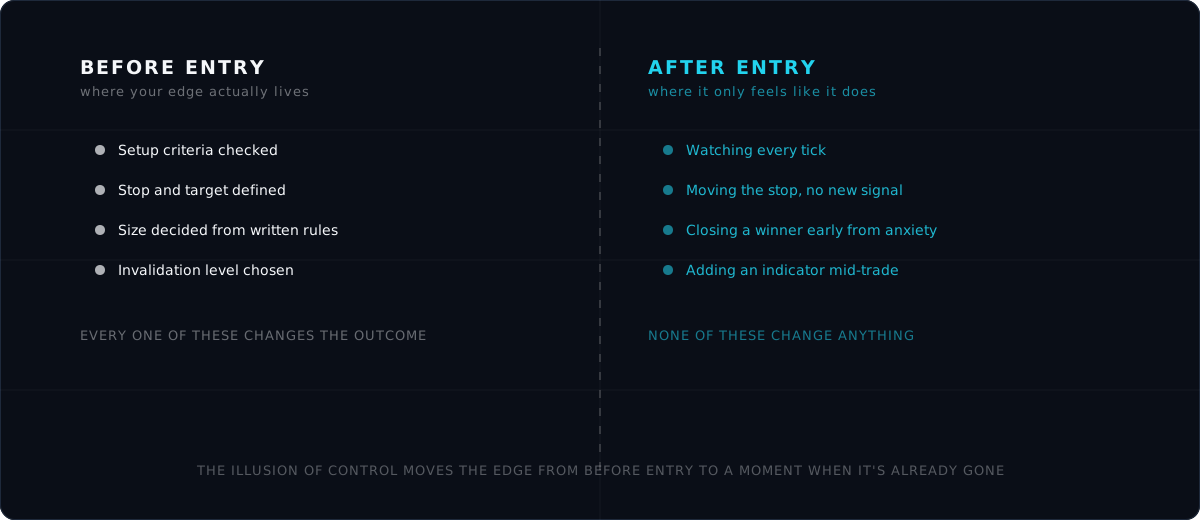
- Moving the stop with no new information — just because price is "getting close" and watching it happen feels unbearable
- Closing a winning trade early because sitting with open profit feels like tempting fate, not because any exit criterion was actually met
- Refreshing news or a lower timeframe chart mid-trade, hunting for something — anything — that justifies acting
- Adding an indicator or drawing a new trendline after entry, as if more analysis now will influence a decision that's already been made
None of these change the outcome of the trade. They only change whether you followed your own plan or abandoned it under the felt pressure to do something.
The Real Cost: Confusing Activity With Control
This is where the illusion of control does its real damage. It doesn't usually blow up an account in one dramatic move — it erodes edge quietly, trade by trade, by turning a planned exit into a moving target. A stop that was moved once "just this time" to give the trade room becomes a habit. A winner that was closed early because the anxiety of holding it felt like risk becomes the reason your average winner never reaches your average planned target. Overtrading often isn't about taking too many setups — it's about taking too many actions inside setups that were already fine.
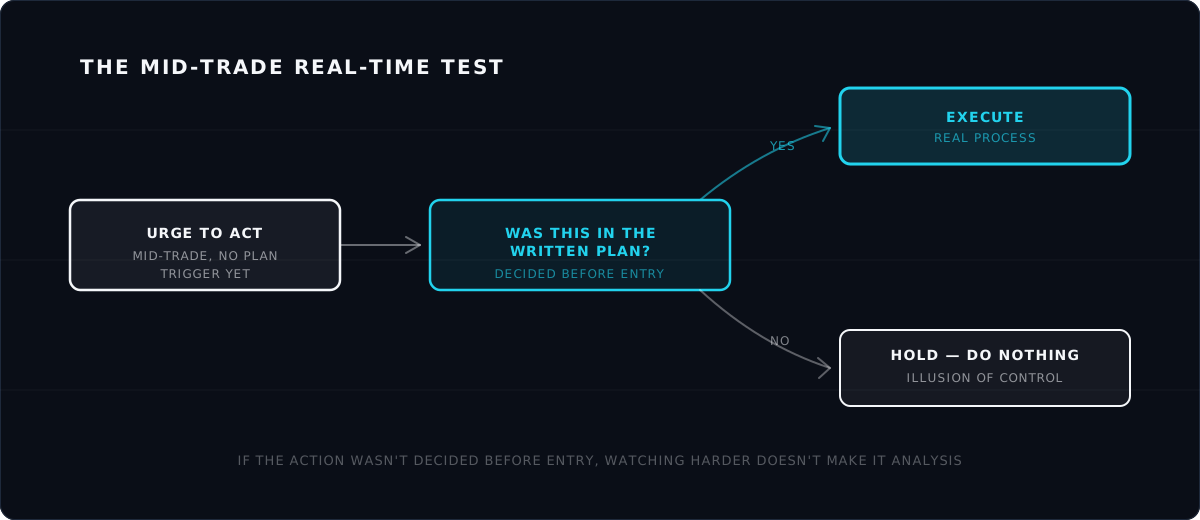
The tell is simple: if an action mid-trade wasn't written down in your plan before you entered, it's very likely the illusion talking, not analysis.
How to Tell Real Edge From Illusory Control
Ask one question before any in-trade adjustment: would I make this exact change if I weren't currently watching the chart?
If the answer is genuinely yes — a scheduled news event you flagged in advance just hit, and your plan already said "reduce size before this print" — that's real process. If the honest answer is "I only want to do this because I'm sitting here staring at it," that's the illusion of control asking to be fed.
This is also why trade review matters more than it gets credit for here. Reviewing whether your in-trade adjustments matched your written plan — separately from whether the trade won or lost — is the only way to see the pattern. A trade can go well despite a mid-trade override, which teaches exactly the wrong lesson if you're only grading the outcome.
How to Reduce the Illusion of Control
Write the exit plan before you enter, not while the trade is open. Stop, target, and the specific conditions that would change either one — decided while you have no position and no anxiety attached to the outcome.
Treat "I feel like I should watch this closely" as a signal to step away, not lean in. The urge to monitor tends to spike exactly when there's nothing useful left to monitor for.
Log what you actually did mid-trade, not just how it turned out. Jared Tendler, who has spent years coaching traders and poker players on performance psychology, has written about the gap between felt control and actual influence over outcomes as one of the most common blind spots separating a trader's self-image from their actual process.
MindTradr logs the plan you wrote before entry alongside what actually happened during the trade, so a mid-trade override shows up as exactly that — not as a detail that quietly disappears into a win. MindTradr is a trading psychology journal built to separate the decisions that shaped your outcome from the ones that only felt like they did.
The next time you catch yourself unable to look away from a live position, that urge isn't insight. It's the illusion of control asking for something to do. The trade already has everything it's going to get from you — the plan you wrote before you clicked buy.
If you want a clearer read on which of your in-trade actions are process and which are anxiety in disguise, MindTradr is free to start.