
Paper Trading vs Real Money: Why Your Brain Treats Them Differently
My demo account was up 38% in six weeks. Clean entries, stops respected, position sizes by the book. I felt ready.
My first month with real money? I cut two winners early, moved a stop "just this once," and skipped three perfectly good setups because my heart was pounding too hard to click. Same charts. Same strategy. Same person — supposedly.
If paper trading and real trading were the same skill, that month wouldn't have happened. They're not the same skill, and the difference isn't discipline. It's biology.
Why Paper Trading Feels So Easy
A demo account is a video game with delayed gratification. When a paper trade goes against you, your brain registers it the way it registers losing a round of chess — mildly annoying, instantly reframeable. It wasn't real anyway.
That reframe is the whole problem. Because nothing is at stake, the part of your brain that evaluates threats stays offline. You execute your plan with the cold precision of someone who literally cannot be hurt. Demo results are your strategy's performance — not yours.
Paper trading still matters. It's where you learn order types, test setups, and build mechanical fluency without paying tuition in real losses. But it measures your system in a frictionless lab, and markets are not frictionless labs.
What Changes When Real Money Is on the Line?
One word: loss aversion. Kahneman and Tversky's prospect theory showed that humans feel a loss roughly twice as intensely as an equivalent gain. On a demo account this asymmetry barely fires, because "loss" never leaves the realm of abstraction. With real money, every open position is a live threat — and your body responds like one.
Heart rate climbs. Cortisol rises. Attention narrows to the blinking P&L instead of the structure of the trade. Under that load, the calm executor from the demo account is replaced by someone who:
- cuts winners early — locking in relief, not profit;
- lets losers run — because closing makes the loss "real";
- hesitates on valid setups — the demo never taught your hands to click while afraid;
- sizes down or up emotionally — instead of by the plan.
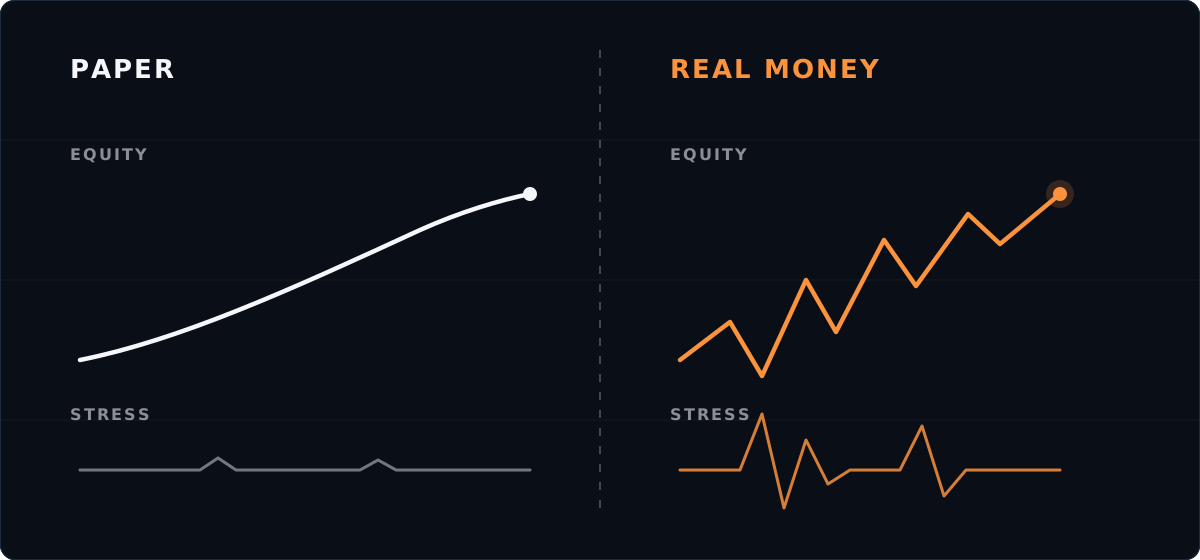
None of this shows up in your demo statistics, which is why the transition feels like a betrayal. Your backtest didn't lie. It just never met your amygdala.
The Skills That Do Transfer
The demo phase isn't wasted time. These carry over almost completely:
- Platform mechanics — order entry, stop placement, hotkeys. Fumbling an order with real money is an expensive way to learn a UI.
- Setup recognition — your eye for structure is the same on both accounts.
- Process habits — pre-market checklists, journaling, review cadence. If you build them on demo, they're waiting for you on live.
What doesn't transfer is the one thing everyone assumes will: emotional regulation under real risk. That skill literally cannot be trained without stakes, the same way you can't train cold-water swimming in a heated pool. Mark Douglas made this point decades ago in Trading in the Zone, and modern performance coaches like Jared Tendler build entire frameworks around it: the mental game only starts when something real can be lost.
How Do You Bridge the Gap?
Not by staying on demo longer. After a point, more paper profits just build more false confidence. The bridge is graduated exposure — the same principle therapists use for any fear response:
- Go live at a size that's almost boring. Risk so small that a full stop-out costs less than lunch. You're not trading for profit yet; you're training your nervous system to feel real risk and execute anyway.
- Keep the size until the feelings get quiet. Not gone — quiet. When checking the position stops feeling urgent, double it. Repeat.
- Journal the emotional delta, not just the trades. The data you need now is how differently you behave with money on the line: where you hesitated, what you felt before the rule break, how sleep changed your patience.
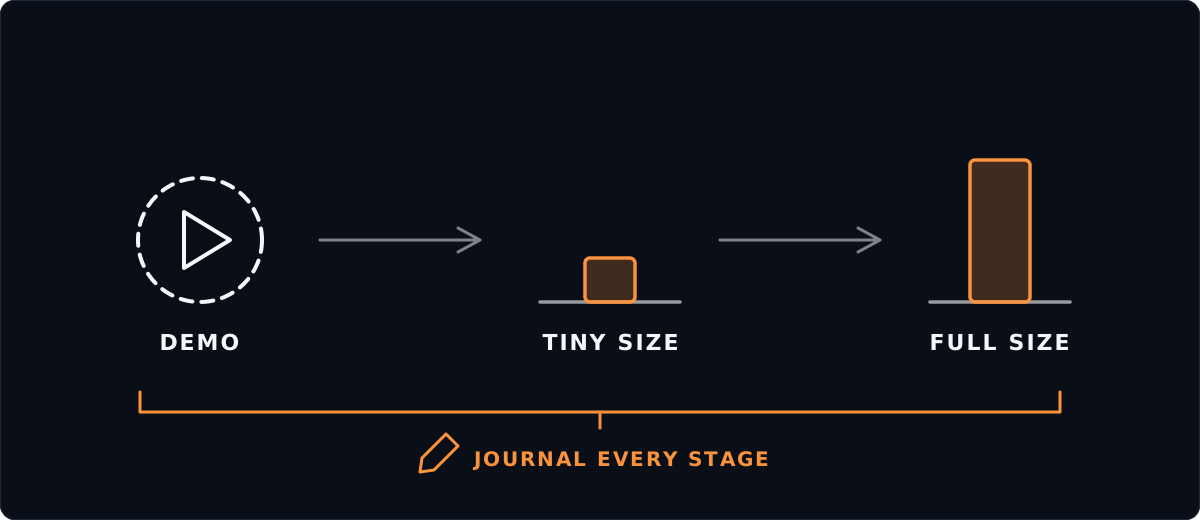
That third step is the one traders skip, because a spreadsheet has no column for "felt sick at entry." MindTradr is a psychology-first trading journal that records your mood, stress and sleep next to every trade — so the gap between your demo self and your real-money self shows up as data you can actually work on, not a vague feeling of being worse than you should be.
If you've ever frozen on a perfectly valid entry, that's the same mechanism — I wrote about it in the fear of pulling the trigger. And if you're not sure how to even start writing feelings down without cringing, here's how to track trading emotions without feeling stupid.
The Honest Conclusion
Paper trading proves your strategy. Real money tests you. Both tests matter, and passing the first while failing the second isn't a character flaw — it's the default human response to risk, documented in fifty years of behavioral research.
The traders who make the transition aren't the ones who felt nothing. They're the ones who expected the fear, sized small enough to function inside it, and kept a written record of what the fear actually did to their decisions until it lost its grip.
Start the record before your first real trade — your demo self is about to become your most useful benchmark. You can start free with MindTradr and keep that benchmark from day one.