Caffeine, Alcohol, and Your P&L: The Chemistry of Bad Sessions
It's the third coffee before the open, and your leg is bouncing under the desk. Or it's a Monday and you're trading through the dull static of two glasses of wine from the night before. Either way, you feel fine. You feel ready. That feeling is the problem.
Caffeine and alcohol are the two most common drugs in a trader's day, and both change the person making your decisions before a single order goes in. This isn't about willpower or discipline — it's chemistry, and it's working whether you notice it or not.
Your Nervous System Is Medicated Before You Place a Trade
Most trading-psychology advice treats your brain as a fixed instrument you either control or don't. But a stimulant and a depressant are actively re-tuning that instrument every session.
This is a different mechanism from the two you've probably already read about. It's not the cortisol and adrenaline your body makes under pressure — that chemistry is endogenous, produced by the trade itself. And it's not sleep debt, which is about the rest you didn't get. Caffeine and alcohol are things you put in on purpose, usually on autopilot, and they stack on top of both.
The uncomfortable part: you dose them by habit, not by how the market looks or how you actually feel. That mismatch is where the damage starts.
What Caffeine Does to a Trading Brain
Caffeine works by blocking adenosine — the molecule that builds up through the day and makes you feel tired. As Matthew Walker explains in Why We Sleep, caffeine doesn't remove your fatigue; it hides it, and it lingers for hours because its half-life runs roughly five to six hours. The 8am coffee is still meaningfully in your system when you're managing an afternoon position.
In the right dose, that's genuine edge — alert, focused, quick to read structure. Push past it and the same chemical turns against you:
- False urgency. Caffeine narrows your tolerance for waiting. A setup that isn't ready starts to feel like a setup you're missing, which is exactly the fuel for FOMO entries and overtrading.
- Tunnel attention. Your focus clamps onto the most salient thing on the screen — usually the P&L tick — instead of the broader context you need.
- Amplified reactivity. A small adverse move lands harder. Jitter reads as signal.
The trap is that over-caffeination feels like sharpness. You don't experience "I'm wired and impatient." You experience "the market is fast and I need to act."
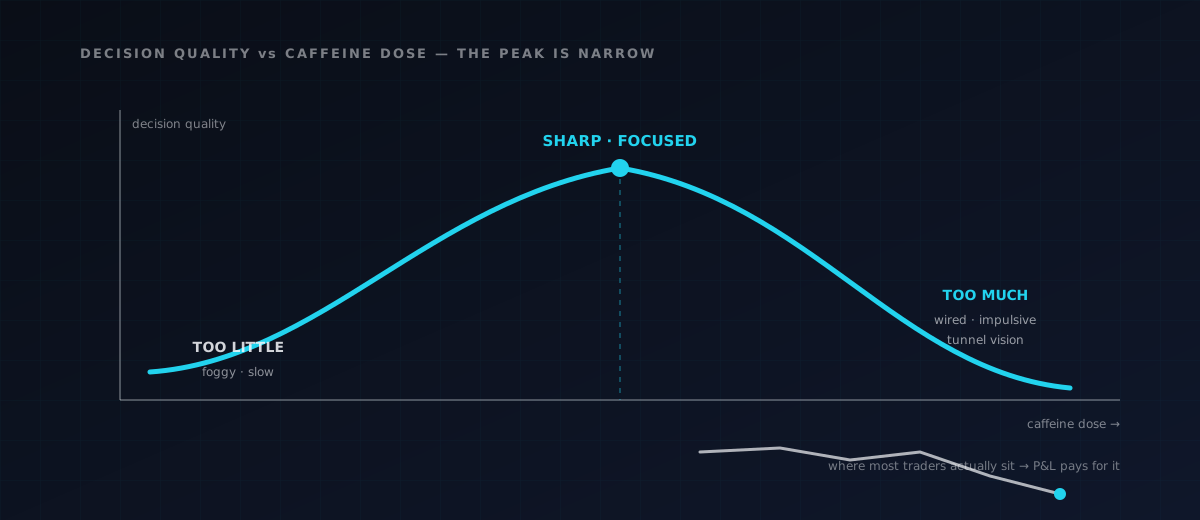
Most traders live on the right side of that peak without knowing it, because the wired state is invisible from the inside.
Alcohol Doesn't Leave When the Buzz Does
Alcohol is the quieter problem because its worst trading effects show up on a delay. You don't trade drunk. You trade the morning after, and you assume you're back to baseline. You're not.
The buzz clears in a few hours, but alcohol wrecks the architecture of your sleep long after — it suppresses REM and fragments the deep sleep that restores your prefrontal cortex, the part of the brain that follows rules and weighs risk. So you can log eight hours in bed, wake with no hangover, and still sit down with degraded impulse control and slower risk assessment.
That's the residual cost that never makes it into your journal:
- Sleep that looks fine but isn't. Hours in bed ≠ restorative sleep. The number lies.
- Blunted risk sensitivity. The morning-after brain is worse at feeling that a trade is off — the exact instinct you rely on to skip a bad one.
- Lower frustration tolerance. A red open on a next-morning brain tips toward tilt faster.
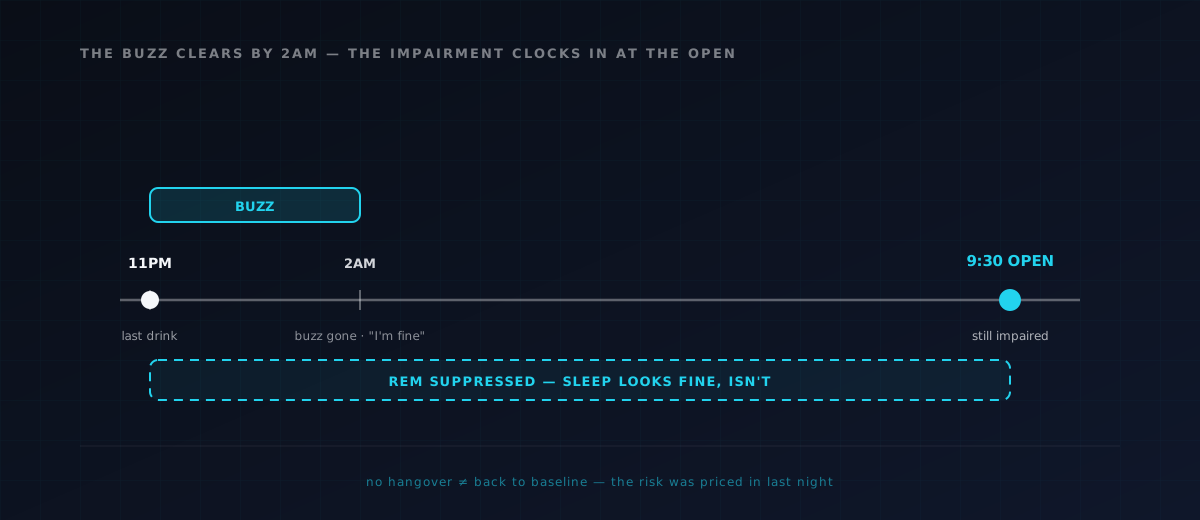
The trader who "only had a couple last night" and takes a marginal setup at the open isn't being reckless in the moment. The recklessness was priced in the night before.
How Much Is Too Much for Your Trading?
There's no universal number, and anyone who gives you one is selling something. Caffeine tolerance varies enormously between people, and alcohol's next-day cost depends on dose, timing, and your own sleep. The honest answer is that the threshold is personal, and you have to find yours by tracking it — not by guessing.
But there are reliable signals you've crossed the line into the impairment zone:
- You can't sit still for a valid "no trade." Waiting feels physically uncomfortable — a caffeine tell.
- You're checking P&L compulsively instead of reading price structure.
- The morning after a few drinks, everything looks like a setup — or nothing does, and you force one anyway.
- You "need" the coffee to function, which means you're medicating a sleep debt, not sharpening a rested brain.
If two or more of those are true before you've placed a trade, your chemistry is already voting on your decisions.
How to Trade Around Your Own Chemistry
You don't have to quit coffee or become a monk. You have to make the dose a decision instead of a reflex — and to do that, you need to see the pattern in your own data, not in a blog post.
- Log intake before the session, not after. Note cups of coffee and last night's drinks before the open, while you can't rationalize. Logging after the fact just records the story you tell yourself.
- Cap the pre-open caffeine, then reassess. Find your peak and stop one cup short. If you feel foggy, that's information — often about sleep, not caffeine.
- Treat "morning after" as a reduced-size day. Even with no hangover, size down and skip adds to losers. You're trading a slower brain.
- Watch the stack. Caffeine masking short sleep, plus a next-morning brain, plus a stressful open is three impairments compounding — the same way decision fatigue piles up across a session.
- Review it against results after 30 sessions. Sort your outcomes by intake and the pattern shows itself.
That last step is where a journal earns its keep. MindTradr is a trading psychology journal that logs your mood, sleep, and stress alongside your P&L, so a habit like "my worst sessions follow the mornings I over-caffeinate on four hours of sleep" stops being a vague suspicion and becomes something you can see. Composure isn't only how you handle a losing trade — it's the state you show up in before the first one.
You can't out-discipline your own chemistry, but you can stop being surprised by it. Track what you put in, size to the brain you actually brought to the desk, and the "random" bad sessions start looking a lot less random. MindTradr is free to start, and it surfaces exactly these patterns — the ones sitting in plain sight between what you drank and how you traded.