
Trading the News: Why Volatility Events Break Your Process
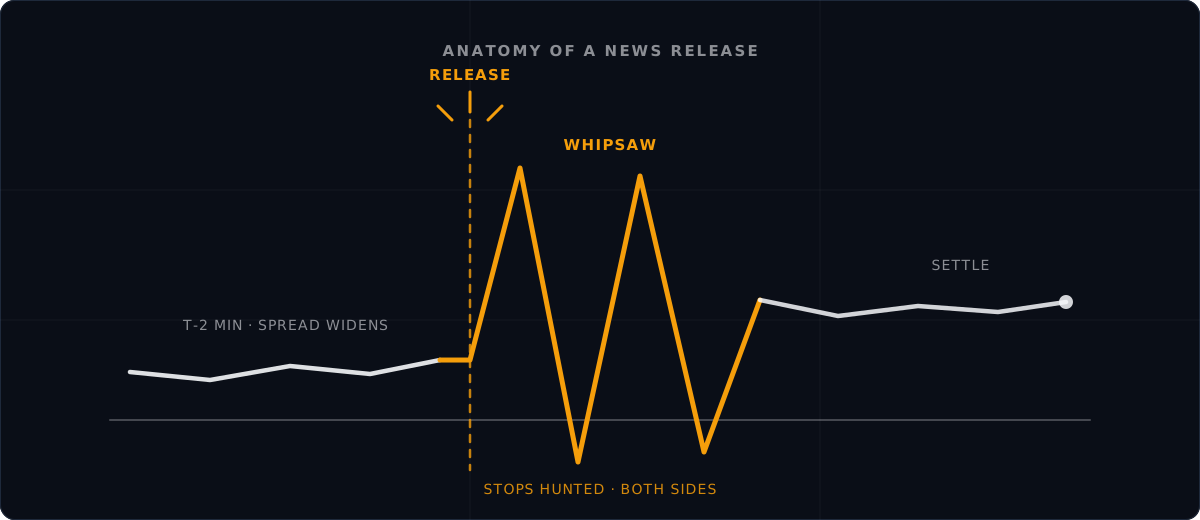
Two minutes to the number. The spread on your instrument, usually a tick or two, quietly balloons to something ugly. You've got a plan — you swear you do — but your finger is already hovering. The print drops. Price rockets up, you go long, and half a second later it's forty points below where you entered, your stop is gone, and you're staring at a red number you can't fully explain.
That's not a bad trade. That's a volatility event doing exactly what volatility events do to a normal process. The setups you trade the other 95% of the time assume things that stop being true in the sixty seconds around a scheduled release.
News trading isn't a smaller version of your regular trading with more excitement bolted on. It's a different game with different physics, and most of the damage comes from bringing your normal-day reflexes into a market that has temporarily stopped obeying them.
Why News Events Break Your Process
Your edge is a set of assumptions. Liquidity is there when you need to exit. The spread is stable. Price moves in a way your stop can actually protect. A scheduled catalyst — FOMC, a jobs report, CPI, an earnings release — voids all three at once.
Here's what quietly changes in the seconds around the print:
- Liquidity thins out, then vanishes. Market makers pull quotes before a known event because they don't want to be run over. The book you're trading against gets thin exactly when you most need it deep.
- Your stop stops being a stop. With a widened spread and gapping price, a resting stop doesn't fill where you set it. It fills wherever the next real bid or offer sits — which on a fast print can be far away.
- The first move is often a fake. Algorithms react in milliseconds, spike price one direction to trigger stops, then reverse. The "obvious" direction traps the humans who chase it.
None of this is a character flaw in you. It's market structure. The mistake isn't feeling the pull to trade the spike — it's assuming the tools that keep you safe on a quiet Tuesday still work when the whole microstructure has changed underneath you.
This is a different problem from ordinary pre-market anxiety, which is about your body over-preparing for a normal open. Here the open is normal; it's the event that's abnormal — and your process, not your nerves, is what needs adjusting.
Your Brain on a Volatility Spike
Now layer the psychology on top of the structure, because they feed each other.
A violent, fast-moving candle is one of the most powerful attention magnets a trader ever sees. It reads as opportunity and threat simultaneously — huge range, huge speed, money visibly moving. Your threat system spikes cortisol; your reward system fires on the size of the move. Both push you toward action, and neither is doing the careful math your setup requires.
Dr. Brett Steenbarger writes often that peak performance lives at moderate arousal — sharp but calibrated. A news spike blows straight past moderate. You're not making a decision at that point so much as reacting to a stimulus, and the account pays the difference between the two. This is the same over-arousal engine behind chasing a move you missed — except the news candle compresses the whole FOMO cycle into a few seconds, so there's no time to catch yourself mid-mistake.
The accumulated toll matters too. Repeatedly white-knuckling through releases keeps you in a high-cortisol state that bleeds into the rest of your session — a mechanism covered in more detail in stress and trading performance. One reckless news trade rarely stays contained; it sets the emotional tone for everything after it.
Are You Trading the News or Trading the Noise?
This is the question that separates the two versions of "news trading," and it's worth answering honestly before every event.
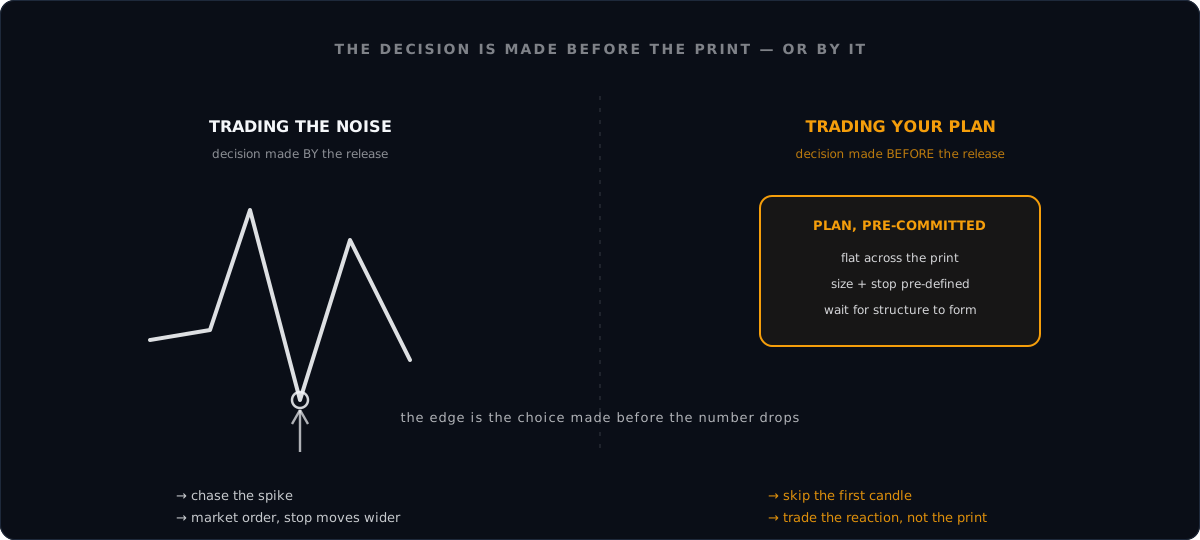
Trading the news is a deliberate, pre-planned strategy: you've studied how your instrument behaves around this specific release, you have defined rules for entry, size, and the wider stops the environment demands, and you accept the different risk profile going in. It's a real approach, and some traders build an edge there.
Trading the noise is what most people actually do: they had no plan for the event, the spike pulled them in, and they improvised size and direction in a state of high arousal. Same button, completely different activity.
The honest test is timing. If your decision to be in the trade was made before the release, you're trading the news. If it was made by the release, you're trading the noise. Mark Douglas built much of Trading in the Zone around exactly this distinction — that discipline is the plan you commit to before the market can hijack your judgment, not the willpower you summon after it already has.
Most traders don't need a news strategy. They need a news rule — and for the majority, the most profitable rule is simply: don't be in a position across a scheduled high-impact event unless being there was the entire plan.
A Pre-Event Protocol That Holds
You beat volatility events the same way you beat any high-arousal moment: by deciding in advance, while you're still calm, what you'll do when you're not. A trading plan that ignores the economic calendar has a hole in it exactly where the biggest single-minute moves live.
- Know the calendar before the open. Mark every high-impact release for your instrument. Surprise is what turns a plan into an improvisation.
- Default to flat across the print. Unless news trading is your deliberate, studied strategy, be out of open positions before the release and let the first move resolve before you re-engage.
- Widen stops or don't trade at all. If you do trade the event, your normal stop distance is a fantasy. Size down hard so a wider, realistic stop still respects your risk.
- Skip the first candle, trade the reaction. The initial spike is where stops get hunted. Waiting for structure to form after the dust settles trades a cleaner, slower move.
- Log the event, not just the trade. Note that it was a news session and how you felt going in — jumpy, greedy, flat. That tag is what makes the pattern visible later.
That last point is where the log earns its keep. If all you record is entries and exits, a news blowup looks like a random bad trade instead of a repeatable one you can design around. MindTradr is a trading psychology journal that logs your mood, stress, and sleep next to every trade — so a session tagged "FOMC, felt jumpy, chased the spike" stops being a mystery and starts being a rule you write for next time. Composure around a volatility event isn't staying calm during the whipsaw; it's having already decided you won't be in it.
None of this means events are untradeable. It means they demand a separate, pre-committed process — and the traders who survive them are the ones who decided their move before the number ever dropped. MindTradr is free to start, and news sessions are among the first patterns it tends to surface in your own history.