
Patience vs Passivity: Waiting or Just Frozen?
You closed the platform without taking a single trade. No losses, no revenge entries, no blown stops. On paper it was a clean, disciplined day.
So why does it feel less like patience and more like you flinched?
That gap — between the day you held out and the day you hid — is the whole subject here. Both look identical from the outside. Only one of them is actually your edge working.
Patience and Passivity Look Identical on Your Statement
At the end of the session, flat is flat. A patient trader who waited for a setup that never came and a passive trader who froze on three valid ones close the day with the same P&L: zero. The account can't tell them apart. Neither can a highlight reel of "no-trade discipline."
The difference is entirely internal, and that's exactly why it goes unexamined. Passivity is the one trading mistake that never shows up as a red number. It hides inside a green (or flat) day and calls itself restraint.
I made the case for waiting itself in trading patience — why sitting flat is harder than it sounds and why it protects your edge. This piece is the sequel to that: not should you wait, but how to tell real waiting from the counterfeit that wears its face. Because patience vs passivity isn't a spectrum of the same thing. They're two different engines that happen to produce the same silence.
So What Actually Separates Patience From Passivity?
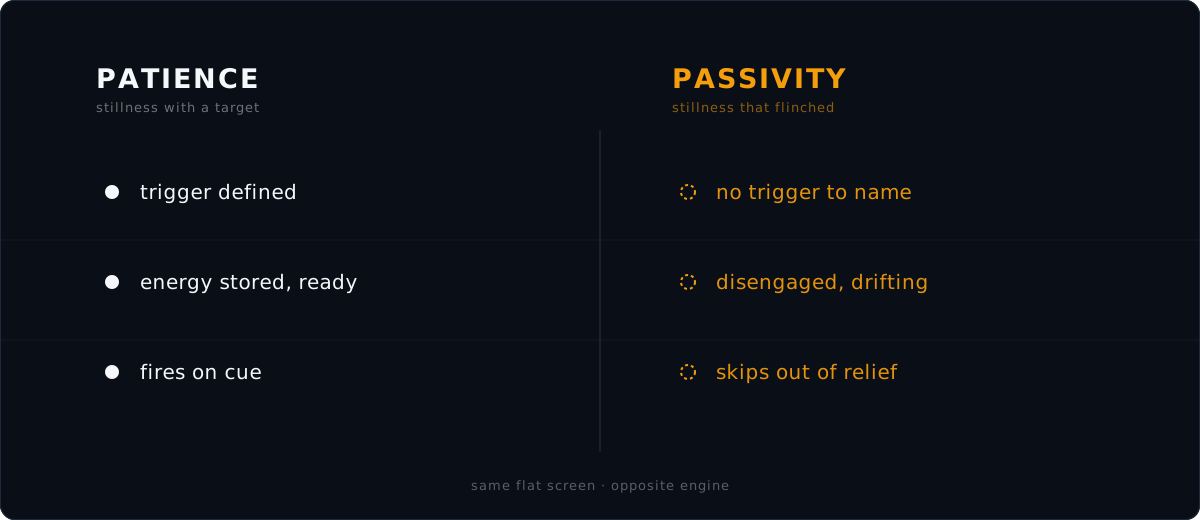
Patience is a decision with a target. You're holding fire because the specific conditions you defined haven't appeared yet — and the moment they do, you act. The stillness is loaded.
Passivity is the absence of a decision. You're not-trading because acting feels dangerous, or because you've quietly disengaged and stopped looking for reasons to act at all. The stillness is slack.
Same flat screen. Opposite internal states:
- Patience is aimed. It has a trigger it's waiting for.
- Passivity is avoidant. It's waiting for the discomfort to pass, not for a condition to be met.
- Patience releases on cue. When the setup prints, a patient trader fires without a second internal negotiation.
- Passivity keeps moving the goalposts. When the setup prints, a passive trader finds one more reason it isn't clean enough.
The Three Tells That Give Passivity Away
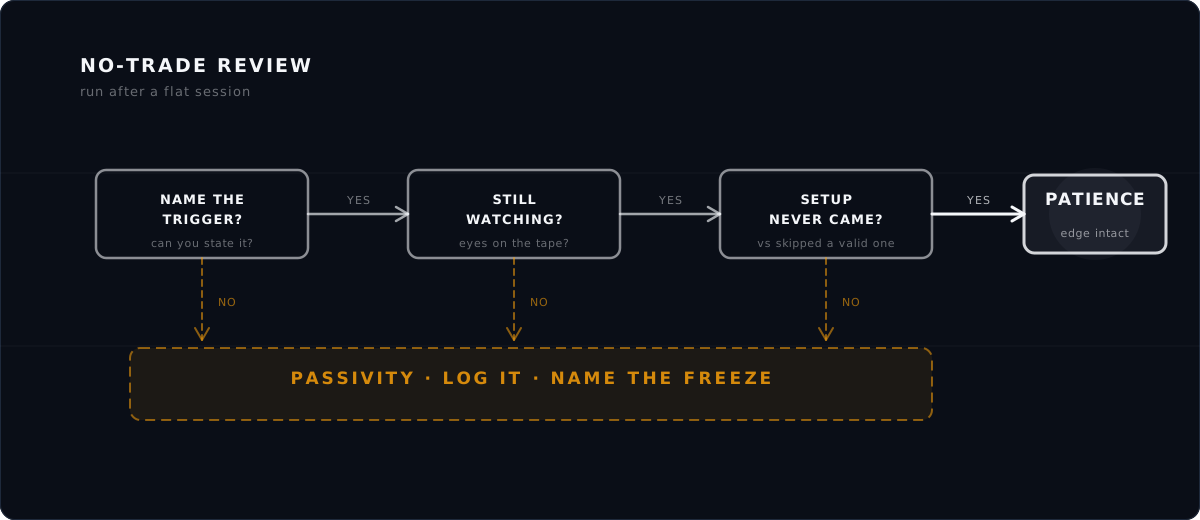
Because they feel similar in the moment, you need external tells — things you can check after the fact rather than trusting the sensation of "being disciplined."
- You can't name the trigger. Patience is waiting for something specific: "entry if price holds above X on the close." If you can't state what you were waiting for, you weren't waiting — you were avoiding.
- You felt relief, not readiness. When a valid setup finally appeared and your gut response was relief that it "wasn't quite clean enough to take," that's fear talking. This is the same freeze I unpacked in fear of pulling the trigger — passivity is often that freeze stretched across a whole session instead of a single click.
- You stopped watching. Genuine patience is active attention — you're tracking the tape, waiting for the condition. Passivity drifts. If you caught yourself scrolling your phone through the exact window your setup usually forms, you weren't being patient. You'd checked out.
Why Passivity Costs More Than a Losing Day
A losing trade gets reviewed. It stings, you log it, you learn something. Passivity gets filed under "good discipline" and quietly repeats. That's what makes it expensive: the mistake that never gets reviewed never gets fixed.
The cost isn't just the missed A-plus setups, though those add up fast. It's what avoidance does to your trust in your own read. Skip enough valid trades and your analysis stops meaning anything to you — you no longer act on it, so you stop believing it. That erosion is slower and more corrosive than any single drawdown. Brett Steenbarger has written for years on his blog that the traders who improve are the ones who build accurate feedback loops about their own behavior — and you can't build a loop around a mistake you've labeled a virtue.
Rebuilding Patience Without Sliding Into Passivity
The fix is the same structural move that fixes most execution problems: move the decision off the live chart, where fear runs it, and onto paper, where your rules do.
- Pre-commit the trigger before price arrives. Write it down: "If X, I enter — no further vote." A decision made in advance can't be quietly downgraded to avoidance in the moment.
- Log the no-trade sessions with a reason. Not just the trades you took — the ones you didn't, and why. "Waited, setup never came" and "saw it, couldn't pull the trigger" are opposite entries that look the same on your statement. Written down, the pattern separates itself within a few weeks.
- Watch your state, not just your screen. Passivity clusters around specific conditions — low sleep, high outside stress, the session after a loss. Tracking mood, sleep, and stress alongside your entries turns "I felt off today" into a visible correlation instead of a vague memory.
That last point is where composure actually lives. Composure isn't the absence of the freeze — it's noticing the freeze early enough to name it and choose. If you keep landing on the passive side of the line and can't tell why, it usually traces back to one repeatable behavior pattern; you can find out which pattern is costing you the most in about two minutes.
This is the whole reason MindTradr lets you log skipped setups next to executed ones and attach a pre-entry read on your mood, sleep, and stress — so the difference between the day you waited and the day you froze stops being a feeling and becomes a number you can review. Jared Tendler, who coaches traders through exactly this kind of performance freeze, makes the same point on his site: you can't out-willpower a pattern you can't see.
Patience that never fires isn't patience — it's the same behavior as overtrading, just pointed in the opposite direction, and it drains an account just as quietly.
MindTradr is free to start. It's a trading journal that tracks your emotional state — mood, sleep, and stress — alongside every trade and every skipped one, so you can see which patterns move your P&L and which ones just feel like discipline.