
Taking Profits Too Early: Why You Keep Cutting Winners Short
The trade is working. You're up. And before your target is hit — before price gives you any reversal signal — you close it.
Not because the setup changed. Because you couldn't stand the possibility of watching this profit evaporate.
You close. Price keeps climbing. You watch.
Cutting winners short is the mirror image of letting losers run. Both errors share the same root cause. Both destroy expectancy quietly, over time, in ways that never announce themselves cleanly in a single trade review.
The Psychology Behind Closing Too Early
Loss aversion — described by Kahneman and Tversky in their 1979 work on prospect theory — doesn't just shape how traders handle actual losses. It shapes how they handle potential losses, including the potential loss of profits that haven't been secured yet.
When a trade moves in your favor, your brain begins treating those unrealized gains as something you already own and could lose. The possibility of watching that floating profit shrink activates the same threat-detection machinery as an actual loss. So you close — not because the trade gave you a reason to exit, but because your nervous system demanded relief from uncertainty.
The technical setup was still valid. The plan hadn't changed. But the emotional state had already overridden the checklist.
What Does Taking Profits Too Early Actually Look Like?
The pattern doesn't always feel like a mistake in the moment. It usually disguises itself as care or good judgment:
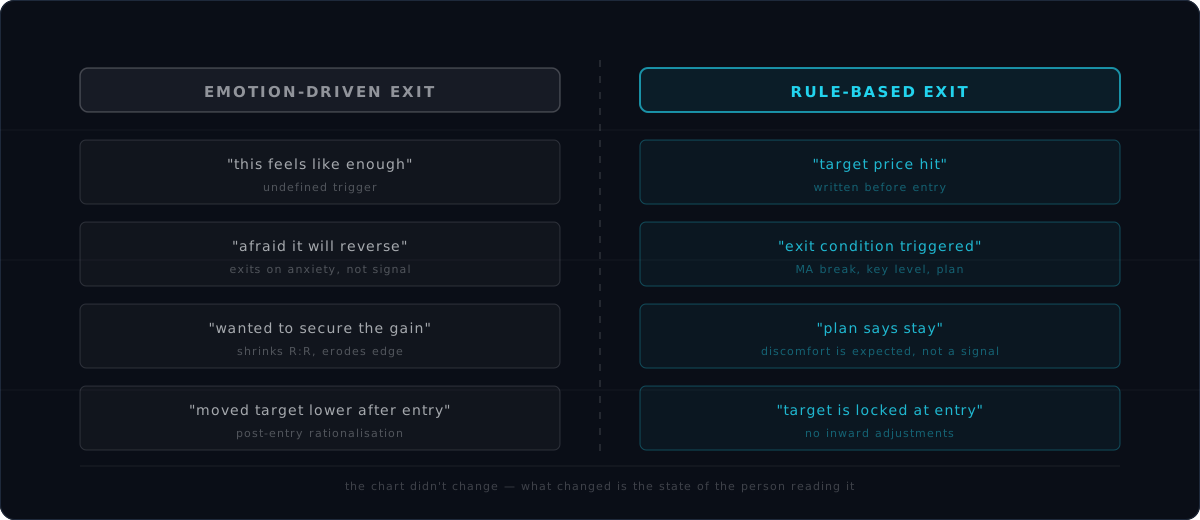
- Moving your profit target lower after entry because "this level looks like resistance now"
- Closing a trade when it recovers from an intraday dip, regardless of where price sits in the range
- Taking profits "to lock something in" when no rule said to
- Watching price approach your target and closing slightly early because it "might stall here"
These exits feel careful. In a session-by-session journal, they start to look different: closes happening consistently before the planned target, across different setups and market conditions. The pattern isn't random — it appears under a specific internal condition. That condition is elevated concern about giving back open profit.
How Early Exits Quietly Destroy Your Edge
Every trading system has an expected value built on the relationship between win rate and average reward-to-risk. The math is straightforward: winners need to offset losers, with enough margin left to make the whole system worthwhile.
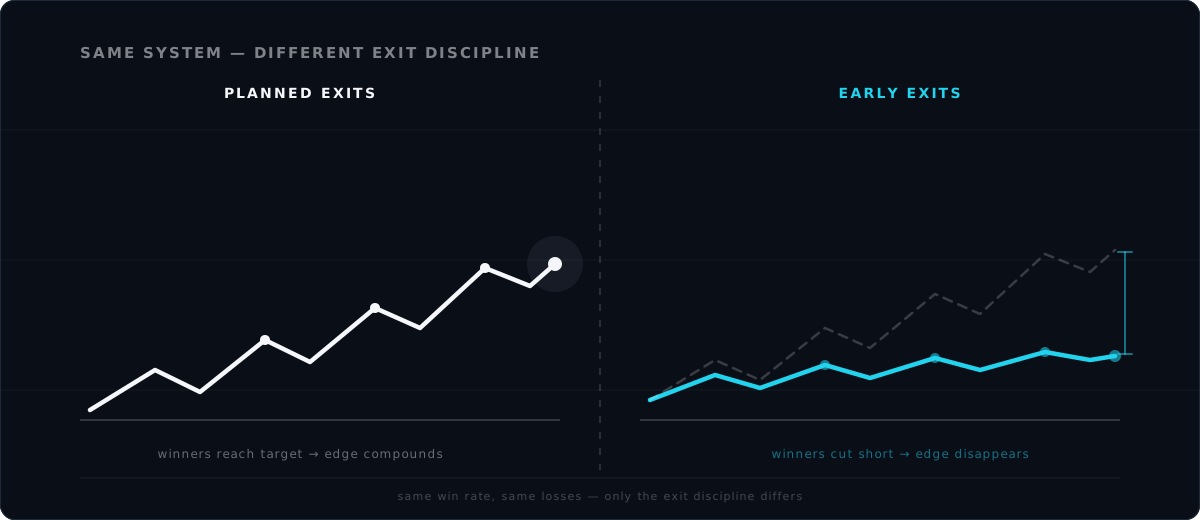
When you consistently exit before your target, you reduce your average win while leaving your average loss unchanged. A system designed around a 1:2 reward-to-risk ratio stops generating its intended edge when real-world exits consistently land well short of the planned target. Individual trades close green. The equity curve doesn't compound the way the planning suggested it should.
This is exactly why risk-reward ratio isn't just a pre-trade planning metric — it's a live performance metric. The number only generates real edge if you actually let winners reach the level you targeted.
Is This a Chart Problem or a Psychology Problem?
This is where most traders misdiagnose what's happening.
The impulse to exit early isn't generated by the chart. It's generated by the open P&L number.
When a trade is live and profitable, attention migrates from "what is price doing relative to my setup" to "what happens to this number if price reverses." These are different questions that pull in different directions. Chart analysis suggests holding. The floating P&L suggests securing. The nervous system hasn't learned to ignore the second signal just because the first one says to hold. It's the same reason watching your P&L mid-trade sabotages otherwise good trades — the number hijacks attention that belongs on the plan.
Dr. Brett Steenbarger, who has spent years studying the psychology of professional traders, writes at TraderFeed about this tension: the more emotionally activated you are by an open profit, the more likely your exit timing is being driven by emotional state rather than trade logic. The chart didn't change. Your relationship to the outcome changed.
Mark Douglas makes the same point in Trading in the Zone — traders exit early not because they read the market wrong, but because they can't tolerate the psychological discomfort of not knowing whether the profit will still be there in five minutes.
Three Adjustments That Actually Change the Pattern
Write your target before you enter — in your journal, not just on the platform. A target written as a commitment before a trade is live carries more psychological authority than a number you're trying to hold in your head while your P&L moves. Writing it down creates a specific reference point that early-exit impulses have to actively override rather than silently bypass.
Track your planned target versus your actual close as a metric. If your journal shows a consistent pattern of closing well before your planned target across sessions, that's evidence — not a vague feeling. Writing this into every trade entry turns a fuzzy psychological complaint into a specific, measurable gap you can actually work on. The gap between planned exit and actual exit is one of the most useful numbers a trading journal can show you.
Create a specific early-exit rule. Instead of "I'll try to hold to target," define a concrete early-exit condition: only close before target if price closes below the 20-period moving average, or if a specific support level is clearly broken. When you have an explicit rule, you're checking a condition rather than responding to discomfort. Condition-checking is a skill you can practice. Willpower-based holding is a resource that depletes.
What the Pattern Looks Like in Your Own Data
MindTradr is a trading psychology journal built to surface patterns like this — logging your emotional state at entry and exit alongside the actual trade data. After several weeks of entries, the correlations in your own numbers become readable: which internal states lead to planned exits, which states correlate with premature closes, and how far you're consistently leaving on the table.
The insight that changes behavior is rarely "I should hold longer." It's "on days when I feel anxious about giving back profit, my exits happen at half the planned distance, and those weeks look noticeably different in my equity curve." That level of specificity is what separates pattern awareness from pattern change.
You already know you close too early. The next step is knowing precisely when, and under what conditions — specifically enough to build a rule around it rather than just trying harder.
If you want to start tracking planned target versus actual close on every trade, MindTradr is free to start.