
Stop Watching Your P&L Mid-Trade
The trade is working. You're a third of the way to target, the setup is playing out exactly like you drew it — and you cannot stop refreshing the number in the corner of the screen. Green. Greener. Then it ticks back, and your hand is already drifting toward the mouse.
Nothing on the chart changed. Your plan didn't change. The only thing that moved was a floating number that means nothing until you close — and it just took the wheel.
Watching your open P&L mid-trade is one of the quietest ways good traders sabotage good trades. Here's what the number is actually doing to you.
Open P&L Is Not Information — It's a Feeling
Your unrealized P&L is not a signal. It's a running total of noise. Between your entry and your target, price wanders up and down for reasons that have nothing to do with whether your idea is right — liquidity, a single large order, the ordinary breathing of the tape.
The chart tells you whether the trade is still valid: is your level holding, is your invalidation intact, has the reason you entered changed? The P&L number tells you none of that. It only tells you how you'd feel if you closed right now — and it updates that feeling several times a second.
So when you stare at it, you're not gathering information. You're marinating in an emotion and calling it analysis. Every green tick whispers take it before it's gone. Every red tick whispers get out before it's worse. Neither whisper is about your edge.
Why Does Watching Your P&L Make You Trade Worse?
Because the more often you check, the more the small swings hurt — and the more they hurt, the worse you decide.
This is myopic loss aversion, and it's one of the most robust findings in behavioral finance. In a 1997 study, Thaler, Tversky, Kahneman and Schwartz showed that the more frequently people evaluated their returns, the more risk-averse and short-sighted their choices became — the same position looked far worse to someone checking it constantly than to someone checking it rarely. Losses loom larger than gains (the core of loss aversion in trading), and every glance forces you to feel a paper loss you would otherwise never have noticed.
A trade you'd happily hold if you checked once an hour becomes unbearable when you check it once a second. The setup didn't get worse. Your sampling rate did.
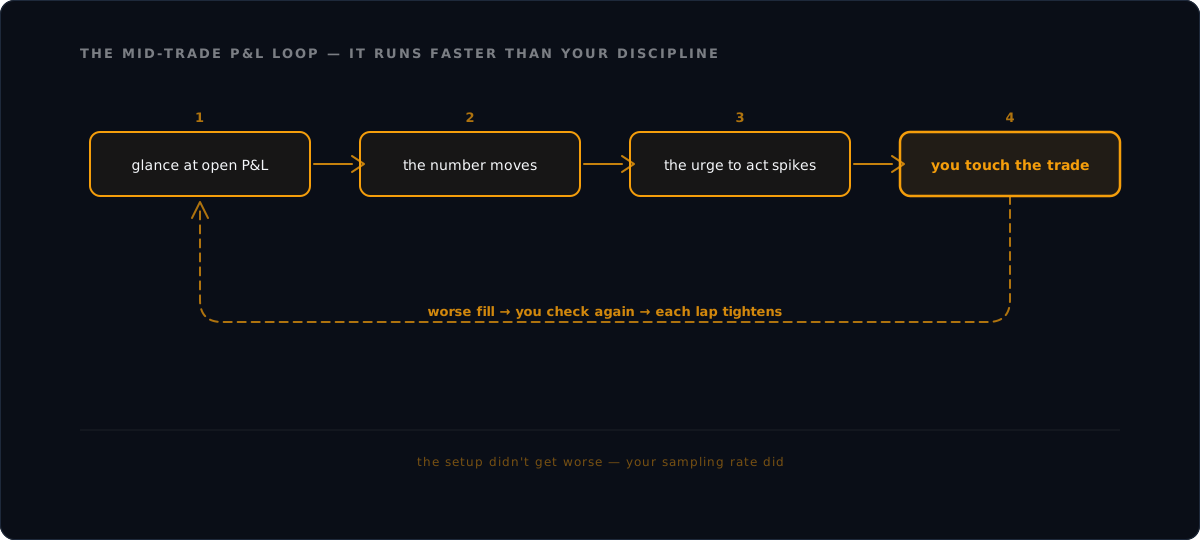
The Mid-Trade Feedback Loop
Once the number has your attention, it builds a loop that runs faster than your discipline:
- You glance at the open P&L. Just checking.
- The number moves. Noise, not news.
- The urge to act spikes. Protect the green, escape the red.
- You touch the trade — tighten the stop into the noise, cut the winner early, add to the loser.
- The outcome gets worse, which makes you check even more.
Each lap tightens. This is the same machinery behind cutting your winners too early: the exit isn't a decision your plan made, it's a reaction the number provoked. The trade management that felt like caution was really just flinching.
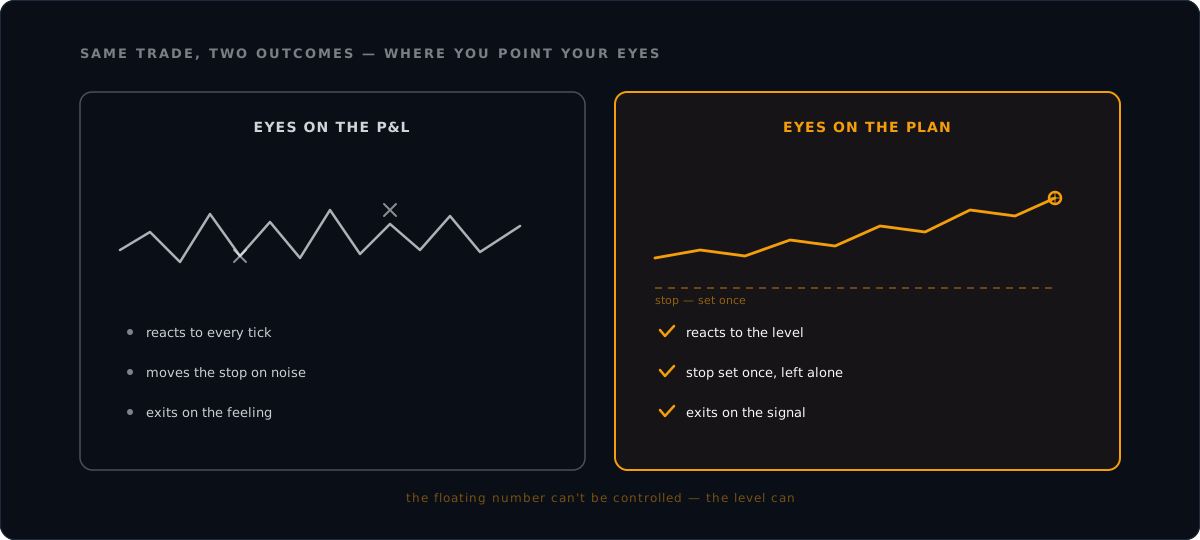
What You're Actually Reacting To
There are two ways to sit in an open trade, and they feel almost identical from the inside.
Eyes on the P&L: you react to every tick, move your stop on noise, and exit the moment the feeling gets uncomfortable. Your attention is on a number you can't control.
Eyes on the plan: you react to the level, set your stop once and leave it, and exit on a signal — the invalidation breaking or the target hitting. Your attention is on the thing that actually decides whether you're right.
The difference isn't willpower. It's where you point your eyes. The floating number is, by design, the most attention-grabbing thing on the screen, and the only reliable fix is to make it harder to stare at.
How to Stop Staring at the Number
You don't beat this with a promise to "be more disciplined" — discipline is exactly what goes offline when the number spikes. You beat it by changing the environment and the record:
- Hide the open P&L. Most platforms let you turn off floating P&L or switch it to ticks/points. If you can't see the dollars, you can't panic about the dollars.
- Decide the exit before you enter. Stop and target set at entry, in the order ticket. A trade with pre-committed exits doesn't need babysitting.
- Zoom out. Drop to a higher timeframe mid-trade so a single candle stops looking like an event.
- Set a check cadence, not a stare. Look at the chart on the close of the bar, not continuously. You're a trader, not a heart-rate monitor.
- Log the pull. When you feel the urge to check, note it — what state you were in, what the trade was doing.
That last one is where the pattern becomes visible. In MindTradr, you log how you felt — mood, sleep, stress — alongside what you actually did with the trade, so the connection between an anxious morning and a hand that can't leave the mouse stops being a vague suspicion and becomes something you can see. This is the same composure muscle behind every other part of the process (more on that in trading composure); Brett Steenbarger has argued for years on his TraderFeed blog that your emotional states are data about your process, not commands you have to obey.
The floating number will always be there, pulling at you. Your job isn't to win the staring contest — it's to stop entering it.
MindTradr is a trading psychology journal that logs your emotional state, sleep, and stress next to your P&L, so you can see which mental states are driving your trade-management decisions — before the floating number does it for you.
If you want to catch yourself reaching for the mouse before the trade pays for it, MindTradr is free to start.