
Coming Back After a Break: Why Your First Session Back Goes Wrong
You took a week off. You needed it — you came back rested, calm, actually looking forward to the open for the first time in a while. Then your first session back is a mess. You force an entry in the first ten minutes, size it wrong, and give back more than you'd like on a setup you'd normally skip.
It feels backwards. You did the healthy thing. You rested. So why does the trader who comes back refreshed so often trade worse than the one who never left?
Because a break doesn't just rest you — it de-syncs you. Your body recovered, but your trading rhythm went cold, and the first session back is where that gap shows up.
Why Trading After a Break Misfires
Trading well is a skilled, state-dependent activity, closer to playing an instrument than reading a report. When you stop for a week or two, three things quietly drift out of alignment:
- Your feel for the current market is stale. Volatility, ranges, and the character of the session move while you're gone. You come back running last month's instincts on this week's tape.
- Your process is no longer automatic. The little sequence you'd grooved — wait for confirmation, size from the stop, log the entry — has gone from reflex back to something you have to think about. Effortful things get skipped under pressure.
- You're carrying a re-entry itch. After days of not trading, there's a pull to "make up for lost time" or prove you've still got it. That urge is doing the sizing before your plan does.
This is the part nobody warns you about: the danger isn't that you're rusty. It's that you feel fresh and assume fresh equals sharp. Rested attention is real, but it doesn't restore market feel or process automaticity. Dr. Brett Steenbarger writes often that trading is a performance discipline built and maintained through deliberate repetition — and like any performance skill, it decays without recent reps. Those come back through screen time, not rest.
This is a different problem from the everyday one solved by a daily trading routine — that's about repeating a system you're already warm in. Coming back after time off is a cold-start problem: the routine exists, but you've fallen out of it, and the first session is where you either ease back in or blow the re-entry.
What Actually Goes Wrong in the First Session
The failure has a shape, and it's remarkably consistent:
- The premature entry. You've waited a week to trade. Sitting on your hands for the first 30 minutes feels unbearable, so you take the first thing that half-qualifies.
- The sizing slip. Your position-sizing math went cold with everything else. You reach for your "normal" size without recalibrating to current volatility — which may have doubled while you were gone.
- The story. Whatever happens next gets narrated. A green first trade becomes "I've still got it, size up." A red one becomes "I need to make this back before lunch." Either way you're now trading the story, not the setup.
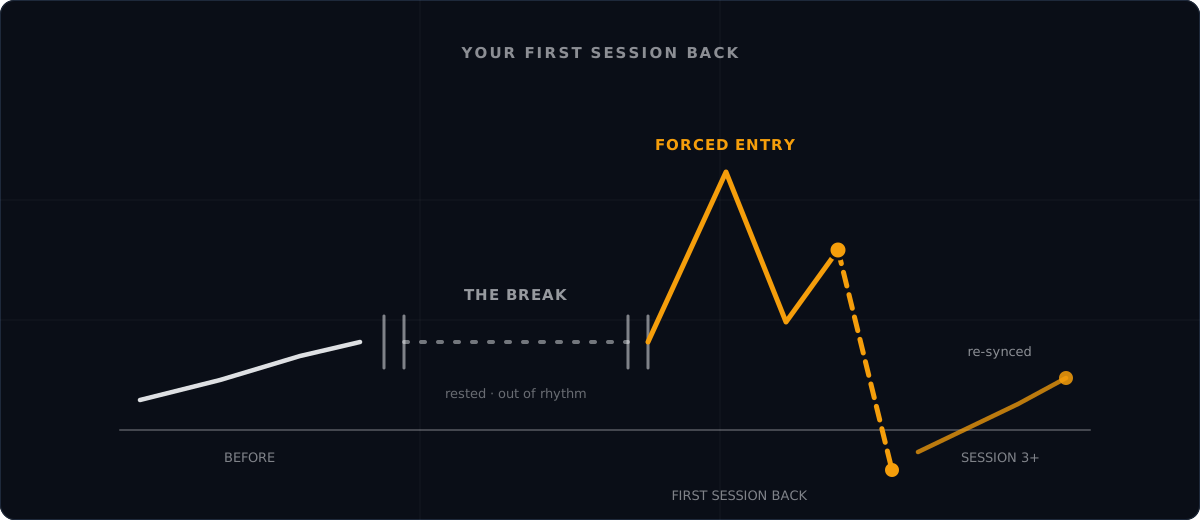
Notice what this is not: it's not a strategy problem. Your edge didn't expire on vacation. The whole miss happens in the gap between "I'm rested" and "I'm re-synced" — and it's entirely avoidable if you treat the first session back as a warm-up lap instead of a race.
How Do You Come Back Without Blowing the Re-Entry?
Treat re-entry as its own protocol, separate from your normal open. The goal of session one is not to make money. It's to get synced — to confirm your feel, your process, and your state are back online before you put real size behind them.
- Size down for the first two sessions, hard. A third to a half of normal. You're paying tuition to re-read the market; keep the tuition cheap. This is the same medicine that works when you're rebuilding after burnout — small size rebuilds neutral engagement before you scale back.
- Trade the second setup, not the first. Deliberately skip the first opportunity of the day. It forces you to sit, observe the current tape, and prove you can wait — which kills the re-entry itch before it costs you.
- Re-read the market before you trade it. Spend the first part of the session just watching. Where are today's ranges? How fast is it moving? Is the open trending or chopping? Answer those before you touch the button.
- Recalculate size from scratch. Don't reuse last month's number. Size from the current stop distance and current volatility, every time, until it feels automatic again.
- Log your state before the open. Note that you're coming back from a break, and rate how synced you actually feel versus how rested. Naming the gap is what keeps you from confusing the two.
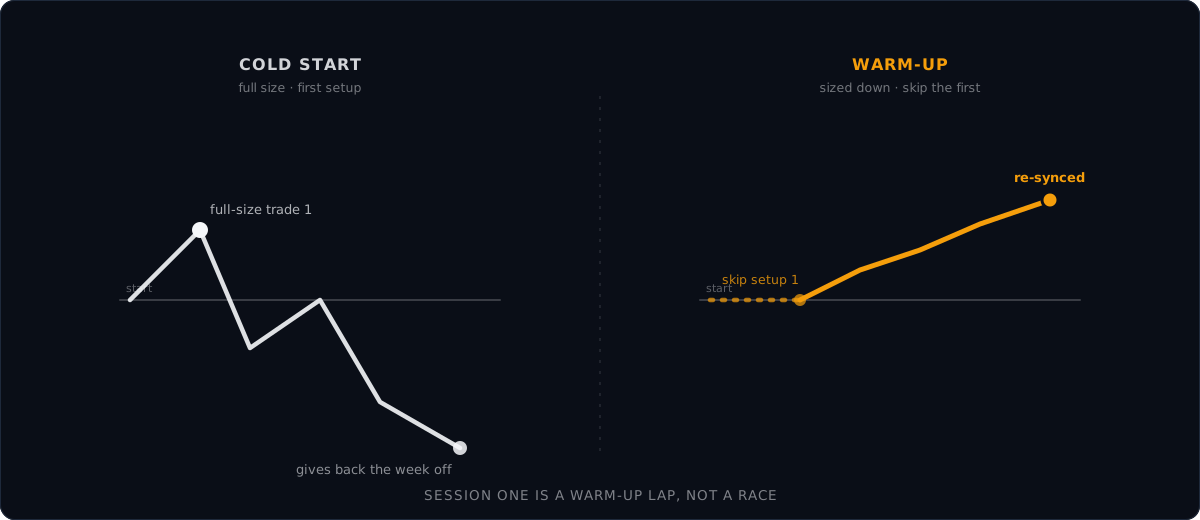
The point of all of this is consistency across the seam. The traders who last aren't the ones who never take breaks — rest is non-negotiable. They're the ones who came back on purpose, with a plan for the transition, instead of stumbling into it and calling the damage bad luck.
Make the Seam Visible
Here's the quiet reason first-sessions-back keep going wrong: they're invisible in most journals. If all you log is entries and exits, a break is just a gap in the data — you never connect the bad Monday to the fact that it was your first day back in two weeks. The pattern hides in the gap.
That's the whole reason state belongs in the log next to the trade. When you note your mood, sleep, and how re-synced you feel alongside your P&L, the first-session-back pattern stops being a mystery. MindTradr is a trading psychology journal that tracks your mood, sleep, and stress next to every trade — so you can see, in your own history, that your first session after time off needs a warm-up, not full size. Composure isn't just staying calm mid-trade; it's respecting the transitions, including the one back from rest.
None of this means don't take breaks. Take them — you need them more than you think. Just don't confuse a rested body with a re-synced trader, and don't let session one carry full size before you've proven the rhythm is back. MindTradr is free to start, and the first pattern it tends to surface is the one hiding in your calendar gaps.