
21 Trading Journal Prompts for Better Self-Review
You just closed a trade. You open your journal, the cursor blinks, and you type "bad trade" — or worse, nothing at all. Then you close the tab. Two weeks later you make the exact same mistake, because a blank notes field never asked you a single useful question.
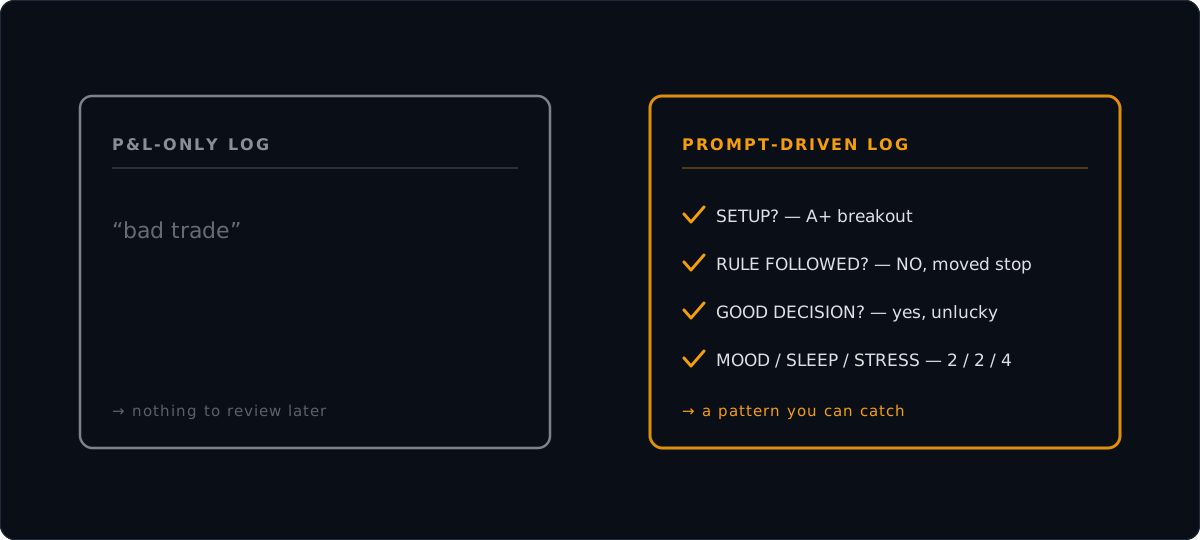
That's the failure mode of most journals: they give you space to write but no reason to think. Trading journal prompts fix that. A good prompt is a question specific enough that you can't answer it with a shrug — and the answer becomes data you can actually review later.
Why Prompts Beat a Blank Notes Field
If you've read what to write in a trading journal, you already know which fields to log. And how to review your trades covers the process of reviewing them. This post is the missing middle: the exact questions that pull honest answers out of you at each stage of a trade.
The difference matters because a prompt does work an empty box never will:
- It forces a specific answer, not a mood ("bad trade" tells future-you nothing).
- It separates process from outcome — the only way to learn from a winner that was actually a mistake.
- It captures state — your mood, sleep, and stress — right next to the P&L.
- It gives you something concrete to pattern-match on across dozens of sessions.
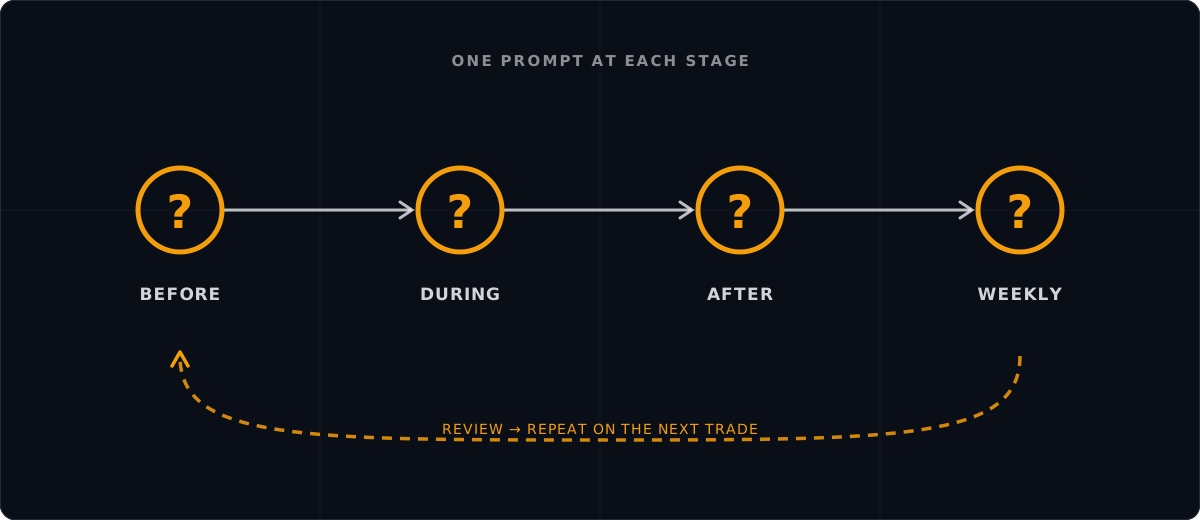
You don't need all 21 every time. You need the right few at the right moment. Here they are, grouped by when to ask them.
Prompts for Before You Enter
The best entries in your journal happen before the trade, when your read is honest because the outcome doesn't exist yet. Ask these while your finger is off the trigger:
- What's my actual edge here — or am I just bored, or afraid of missing out?
- Where's my stop, and what specifically invalidates this idea?
- What are my mood, sleep, and stress right now, on a 1–5 scale?
- Would I still take this trade if my last one had been a loss? A win?
- What's the one rule I'm most likely to break in the next hour?
Prompt 5 is the sleeper. Naming your most-likely mistake before it happens is the cheapest form of discipline there is.
Prompts for the Trade You're In
Mid-trade is where journaling feels impossible and matters most. You won't write a paragraph, but you can answer one question in your head — and note it after, or say it out loud instead of typing while the moment is still raw. This is also where the urge to watch your open P&L does the most damage:
- Am I managing the trade I planned, or the P&L I'm staring at?
- Has anything actually changed on the chart, or am I just uncomfortable?
- If I had no position right now, would I enter here?
What Should You Actually Ask Yourself After a Trade?
This is where real self-review lives. The trade is done, the emotion is fresh, and you have maybe two minutes before the context evaporates. Don't grade the P&L — interrogate the decision:
- Did I follow my plan — yes or no, no partial credit?
- Was this a good decision that lost, or a bad decision that won?
- What did I feel at entry, and what did I feel at exit?
- Where exactly did I deviate, and what was I thinking when I did?
- What did the market teach me that I didn't know this morning?
- If I could re-trade this once, what's the single thing I'd change?
- On a 1–5 scale, how closely did my execution match my intention?
Prompt 10 is the whole game. Get comfortable calling a winning trade a mistake and a losing trade a good decision, and your review stops being an emotional autopsy and starts being useful.
Weekly Prompts That Surface Patterns
One trade is noise. Thirty trades reviewed together are a mirror. Brett Steenbarger frames improvement as deliberate practice on his TraderFeed blog — structured repetition with feedback, not just screen time. Your weekly review is that feedback loop. Ask:
- Which setup made me the most money — and which one felt best? (Rarely the same.)
- What emotional state shows up in most of my losing trades?
- Which rule did I break most often this week?
- What's the one pattern I've now seen three times?
- Did my worst sessions line up with poor sleep, high stress, or a losing streak bleeding forward?
- What's the single focus for next week — not ten, one?
Prompt 20 is the one traders skip and shouldn't. Your worst stretches usually correlate with your state, not your strategy — and you can only see it if you logged sleep and stress next to the trades in the first place.
How to Use These Without Quitting in Two Weeks
Here's the trap: you read a list of 21 prompts, resolve to answer every one on every trade, and burn out by Friday. That's exactly how most people quit journaling.
Don't do that. Pick three or four prompts total — one before, one during, one after — and answer only those until they're automatic. Add more when you notice a blind spot the current set doesn't catch. A journal you actually fill out beats a perfect template you abandon. Jared Tendler's The Mental Game of Trading lands on the same point: traders improve fastest by targeting one pattern at a time, not by drowning in data.
This is where the prompts and the tool meet. In MindTradr, several of these — your 1–5 mood, sleep, and stress ratings, the yes/no rule check, the process-vs-outcome tag — are structured fields you tap, not sentences you write, so answering them takes seconds and turns into reviewable data automatically. Ask better questions often enough and you build composure: the habit of responding to your own trading with a clear head instead of a clenched jaw.
MindTradr is a trading psychology journal that logs your mood, sleep, and stress next to your trades, so the prompts you answer today become the patterns you catch tomorrow.
If you want your self-review to run on real questions instead of a blinking cursor, MindTradr is free to start.