
Trading With a Full-Time Job: Realistic Systems That Work
The "you need to be at the screen all day to be profitable" idea is one of the most discouraging myths in retail trading. The reality is more useful: most serious swing traders have full-time jobs, and the best constraint they work under is precisely that they can't watch every tick.
The traders who fail while working aren't failing because of the hours. They're failing because they're using a system designed for someone else's schedule.
Why Part-Time Traders Struggle (It's Not the Hours)
The problem isn't that you have fewer hours than a full-time trader. The problem is that most part-time traders try to trade like day traders on a swing trader's schedule.
They enter intraday setups during a lunch break. They manage positions from a phone in meetings. They improvise exits because they can't monitor cleanly. That's not a time problem — it's a system mismatch.
The fix is in principle simple: choose a timeframe that actually fits your availability, then build everything else around that fit. Most traders skip this step because the markets that dominate YouTube coverage — futures scalping, intraday options, crypto day trading — are almost entirely incompatible with a 9-to-5 schedule. The traders who make part-time trading work are usually invisible in that content ecosystem because they're swing traders running daily and weekly charts, not scalpers.
What Timeframes Actually Fit Around a Day Job
Here's the honest map:
- Daily chart swing trading (2–10 day holds): The most compatible approach for standard work schedules. You need 20–30 minutes before work and 20–25 minutes after close. Zero intraday screen time required. Entries can be queued as limit orders the night before.
- End-of-day mean reversion (1–5 day holds): Similar time requirement, more defined entry triggers. Positions are placed before the open; execution is effectively automated while you're working.
- Weekly chart position trading (weeks to months): Even less time-intensive, wider stops, more patience required. Good for traders who can tolerate holding through intraday volatility in exchange for near-zero active management during the day.
- Intraday scalping or day trading: Not viable without uninterrupted attention during market hours. If this is your preferred style and you have a full-time job, you face an irresolvable conflict — every meeting becomes a distraction from monitoring, and every losing session becomes a question of "could I have gotten out earlier if I'd been watching?"
The timeframe you choose should match the time you actually have, not the time you wish you had on a good week.
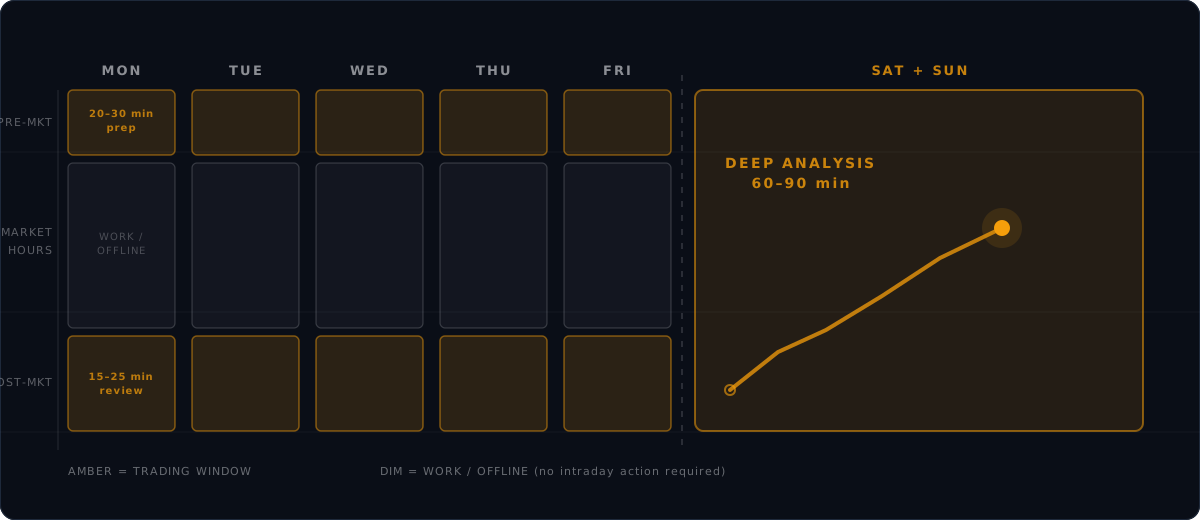
Three Sessions That Compound Without Screen Time
Most experienced employed swing traders converge on the same three-session structure regardless of market or instrument:
The pre-market prep (20–30 minutes) Before leaving for work: check overnight gaps, confirm or cancel any pending limit orders, set price alerts at key levels. No new entries during this session unless an order was queued the night before. This session is pure preparation. The morning routine structure maps directly onto it — the same filter that blocks bad entries on any trading day is most important on days when you won't be able to correct a mistake midday.
The end-of-day review (15–25 minutes) After the close: review price action on open positions, journal the session even if you made no trades, queue tomorrow's potential setups. This is where the actual planning happens. The quality of this session determines the quality of your next morning's preparation.
The weekend deep-work session (60–90 minutes) Weekly chart review, broader sector context, longer-timeframe analysis. No open positions competing for attention. No intraday noise. The weekend session is where swing traders compound their analytical edge, because it has the cognitive space that weekday sessions don't.
This structure — roughly 45 minutes average daily plus one weekend session — is sufficient to run a consistent swing trading practice. It doesn't compete with a full-time job because it was never designed to.
What Breaks Part-Time Traders Intraday
There's a specific failure pattern that ends most part-time trading careers, and it's predictable:
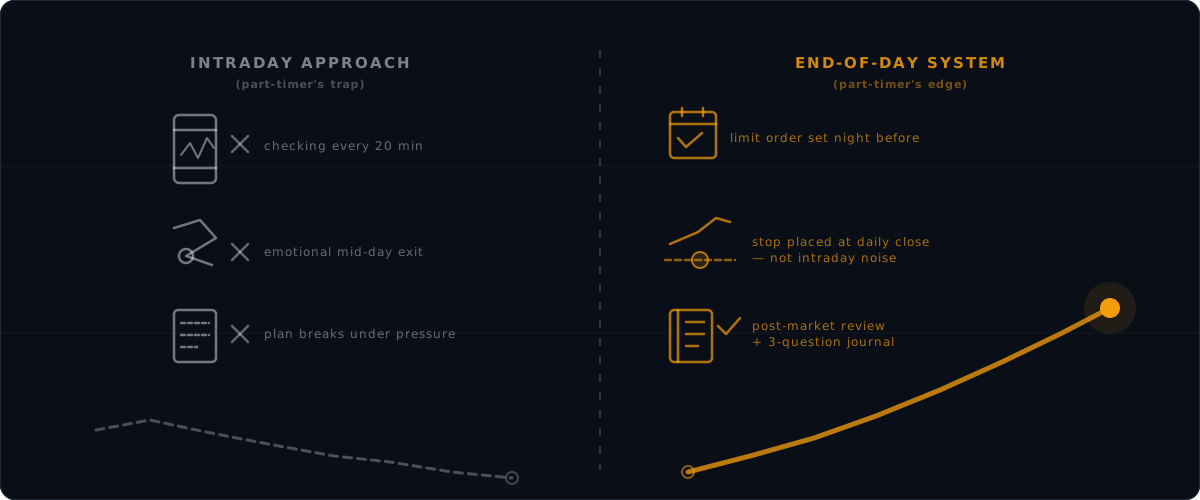
A setup enters on a daily chart setup that looks clean at 9:15 AM. By the time you check it at lunch, it's moved against you — but only by enough to trigger anxiety, not by enough to hit your stop. You can't make a clear decision from your phone in a break room. You hold. By end of day it's closed below your planned stop, the position logic is gone, and the loss is larger than intended.
This isn't bad trading. This is the wrong timeframe for the available time. A daily-chart position with a proper end-of-day stop rule doesn't require you to see intraday noise — and a position that looks bad at noon often resolves differently by close. The problem is only visible from inside a frame where you can't see the full close.
Brett Steenbarger, in Enhancing Trader Performance, identifies plan completeness as one of the core differentiators between erratic and consistent performance. Part-time traders have a structural advantage here: they cannot improvise during market hours, so the plan has to be complete before the session starts. That constraint, treated correctly, is a feature.
Journaling When You Have No Time
Most part-time trading systems collapse at the journal. After a long workday, reviewing a trade and writing coherent notes feels like the last thing you want to do.
The solution isn't more discipline — it's better structure. A useful end-of-day journal doesn't need to be thorough. It needs three things:
- Did you follow your entry criteria?
- Was your stop placement based on the daily chart, or on how anxious you felt at 2 PM?
- What was your mental state when you placed the order?
That third question is the one most traders skip. Over 30 sessions, the pattern between emotional state at entry and trade outcome becomes readable — and it's the kind of data that informs the trading systems that survive bad days, not just good ones.
MindTradr is designed around exactly this log: a quick end-of-session check-in that captures both what you did and how you felt, so the correlation between state and outcome accumulates into something actionable over weeks. The journal is the mechanism that turns isolated sessions into a feedback system — which is what separates a trading practice from a trading habit.
Can Part-Time Traders Be Consistently Profitable?
Yes — but only if "consistent" refers to the process, not the monthly P&L.
The structural reality of part-time swing trading is that some months will have very few setups that meet your criteria in the windows you have available. Forcing trades to fill the time is a day trader's instinct. A swing trader's edge is patience — which comes more naturally when the schedule itself enforces it.
The part-time traders who build durable practices almost never describe themselves as trying to trade as many hours as possible. They describe building a narrow, well-defined system around a narrow, well-defined schedule — and holding both equally.
The system isn't a compromise. For a trader with a full-time job, it's the whole point.
If you want to start tracking your sessions, your setups, and your state across the windows you actually have, MindTradr is free to start.