
Trading With Twitter Open: How FinTwit Rewires Your Risk
You've got the chart on one screen and the feed on the other. You planned this trade last night — size, stop, target, all written down while the market was closed and your head was quiet. Then, ten seconds before the bell, someone with 80k followers posts that this exact setup is "the trade of the month." You didn't decide to change anything. But your finger is already nudging the size up.
That small nudge is the whole story. Trading with Twitter open doesn't just distract you — it edits your risk parameters in real time, on a trade you'd already finished planning. FinTwit isn't background noise. It's a live input wired straight into the decision.
What Trading With Twitter Open Actually Does to You
Let's be precise, because this gets lumped in with a different problem. Comparing yourself to other traders is a slow, career-length leak — it works on your self-worth, on the story of where you "should" be by now. That one follows you home.
FinTwit-while-trading is narrower and faster. It doesn't touch your self-esteem. It touches this trade, right now, in the sixty seconds before you click. The feed reaches into a plan you built in a calm state and rewrites its variables while your money is on the line.
The uncomfortable part: it works because you respect the people you follow. A random stranger yelling "buy" does nothing. But a trader you've watched be right, posting conviction on your setup, arrives pre-loaded with credibility — so your brain treats their opinion as new information instead of what it actually is: someone else's risk appetite bleeding into yours.
Why Does the Feed Change Trades You've Already Planned?
Because your plan and your feed live in two different mental states, and the feed always shows up second.
You wrote the plan cold — no position, no pressure, full attention on the rules. Then the open approaches, your working memory fills with confident takes, and you make the actual decision in a hotter, louder state than the one you planned in. Whichever voice is loudest at the moment of the click tends to win, and the feed is engineered to be loud.
Dr. Brett Steenbarger, who has coached professional traders for decades, writes often that performance collapses when execution happens in a different emotional state than preparation did. A feed full of hot takes is a state-change machine. It doesn't argue with your plan — it just changes the you that shows up to execute it.
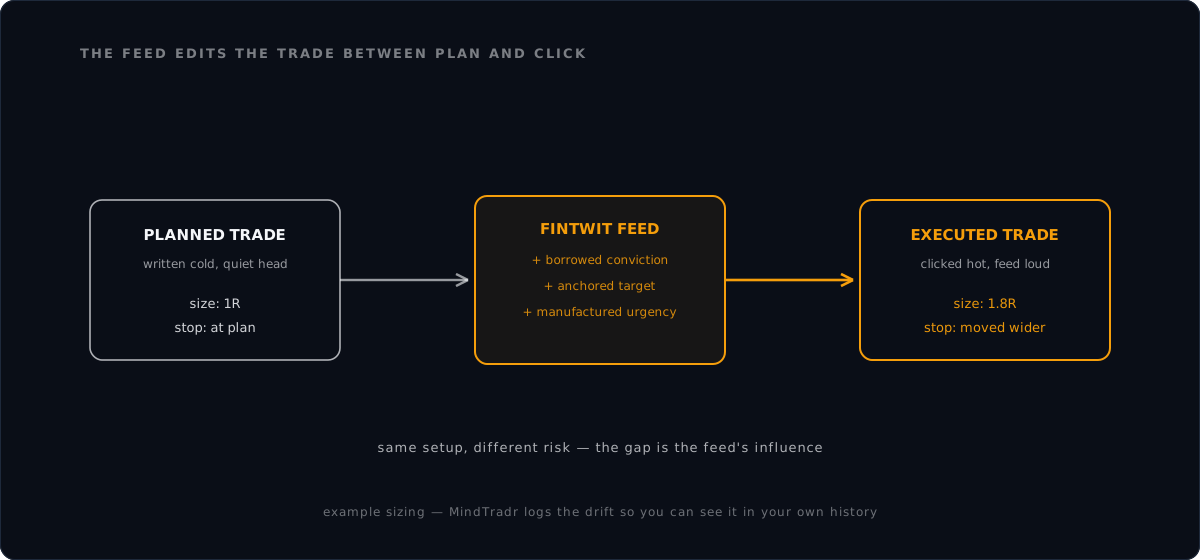
The trade you execute is rarely the trade you planned. The gap between them is exactly the width of the feed's influence — and most traders never measure it because they never write the plan down clearly enough to notice it moved.
The Three Ways FinTwit Rewires Your Risk Tolerance
The feed doesn't change your risk in one obvious lump. It does it through three quieter channels:
- Borrowed conviction. When someone you trust posts high certainty, their confidence feels like your edge. It isn't. You're now sizing off their conviction level, which was built on analysis you can't see and a risk tolerance that isn't yours.
- Anchored targets. Someone posts "this runs to 250." That number lodges in your head, and suddenly your own sensible target feels timid. You hold past your exit, or size up to "make the move worth it," anchored to a level you didn't derive.
- Manufactured urgency. A feed full of "I'm in," "last chance," "don't miss this" turns a patient setup into an emergency. Urgency is the raw material of chasing — the same engine behind FOMO trading, just crowd-sourced and refreshed every fifteen seconds.
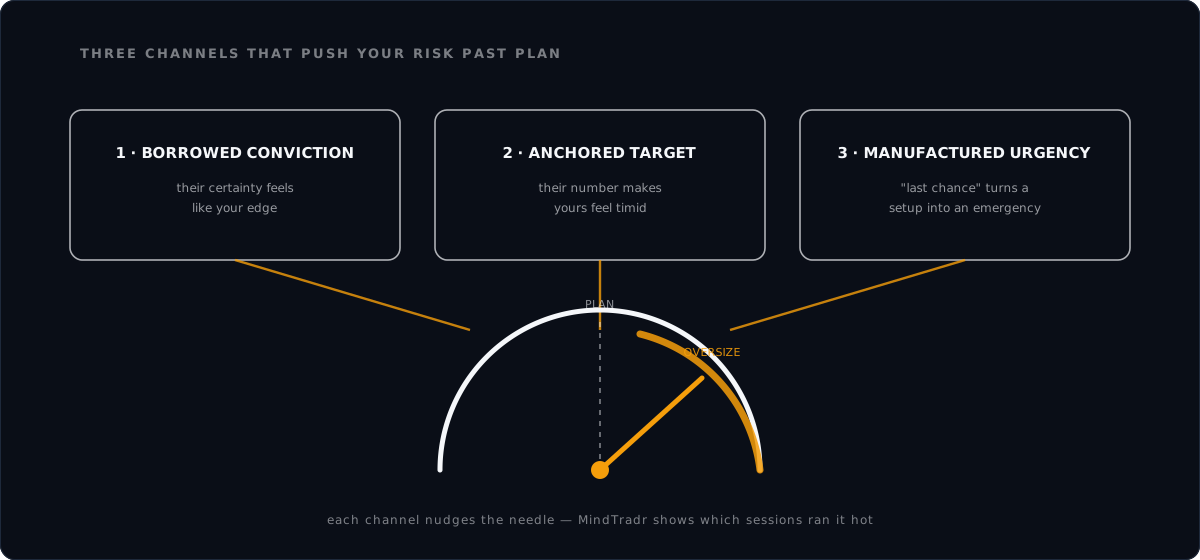
None of these feels like a mistake in the moment. Each one feels like being informed. That's what makes the feed so expensive — it disguises a risk change as a data upgrade.
How to Trade With the Feed Without Letting It Trade You
You don't have to quit FinTwit. Plenty of it is genuinely useful outside the execution window. You just have to stop letting it near the trigger.
- Close the feed during your execution window. Not the whole day — the specific minutes around entries and exits. The plan was made without the feed; execute it without the feed too, so the same you handles both.
- Write size and stop before you open the app. A number committed in a quiet state is far harder to nudge than a vague intention. If the feed can't find a blank to fill in, it can't fill it.
- Treat every feed-driven urge as a logging event, not an action. When a post makes you want to size up, write down the post and the urge instead of acting on it. Jared Tendler's mental game work frames this well: the pull loses its grip once you can see the pattern behind it, not while you're fighting it head-on.
- Review whether feed days trade worse. Tag the sessions where you had the feed open at the open. Over a few weeks, look at whether your position sizing creeps up on those days versus your feed-off days. If it does, that's not a vibe — that's your risk tolerance measurably moving.
That last one is where it stops being an opinion. Holding your plan steady while the feed screams is composure — the skill that actually compounds — and composure is trainable, but only if you can see when you lost it.
Trade Your Own Thesis
The traders who survive FinTwit aren't the ones with the most willpower. They're the ones who noticed that the feed was quietly re-sizing their trades and put a wall between the scroll and the click.
This is exactly the drift MindTradr is built to catch. When you log your mood and stress next to every trade, the feed's fingerprints show up in your own history — the oversized entries clustering on the sessions you spent doom-scrolling other people's conviction.
MindTradr is a trading psychology journal that tracks your mood, sleep, and stress alongside your P&L — so you can see when the feed, not your setup, decided your size. That link between what you were exposed to and what you actually did is the thing a screenshot of the chart can never show you.
The feed will always have a louder opinion than your plan. The only account it's risking, though, is yours — so trade your thesis, not the timeline. MindTradr is free to start.