
Comparison Is a Leak: Measuring Yourself Against Other Traders
You closed green today. Up a clean 1.2%, followed your plan, took the setup you were waiting for. Good day.
Then you open your phone and someone you follow posted a 40% week. Suddenly your green day feels like a loss. The number didn't change. Your account is exactly where it was thirty seconds ago. But now you're annoyed, and the next setup you take is going to be bigger than it should be.
That's the whole problem in one motion. Comparing yourself to other traders doesn't just feel bad — it moves size, moves stops, and moves you off your own plan. It's a leak, and most traders never see it draining them.
Why Comparing Yourself to Other Traders Is a Leak
A leak in trading is any recurring behavior that costs you money without showing up as a "bad strategy." Your edge can be fine and a leak will still bleed the account, because it operates on your decisions, not your analysis.
Comparison is one of the quietest ones. It rarely announces itself as "I'm jealous." It shows up disguised as motivation: I need to catch up. I should be further along. If they can do it on this account, I'm underperforming. Every one of those thoughts ends in the same place — you sizing up, or forcing a trade, to close a gap that only exists because you looked sideways.
This is different from FOMO on a single move. FOMO is about missing this trade. Comparison is about missing an entire life — someone else's returns, someone else's pace, someone else's account size. FOMO passes when the candle closes. Comparison follows you into the next session, and the one after that.
What You're Actually Comparing (And Why It's Rigged)
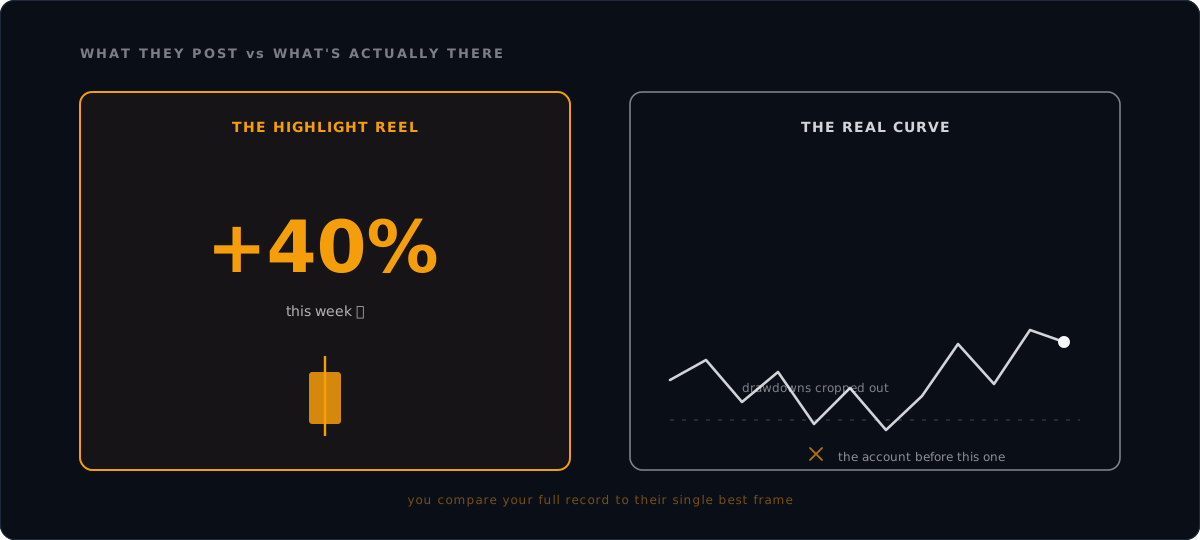
Here's the part nobody says out loud: you're not comparing yourself to another trader. You're comparing your full, unedited reality to their highlight reel.
You see their 40% week. You don't see:
- The three months of flat, boring, break-even grinding before it.
- The account they blew last year that they'll never post about.
- The size they were actually trading (was that 40% on $2k or $200k?).
- The losing trades cropped out of the screenshot.
- Whether the number is even real.
Psychologist Leon Festinger's social comparison theory (1954) described exactly this pull — we instinctively measure ourselves against others to figure out where we stand, and we do it most aggressively when we're uncertain. Trading is uncertainty distilled. So the instinct fires constantly, and it fires against rigged data: their best moments versus your Tuesday.
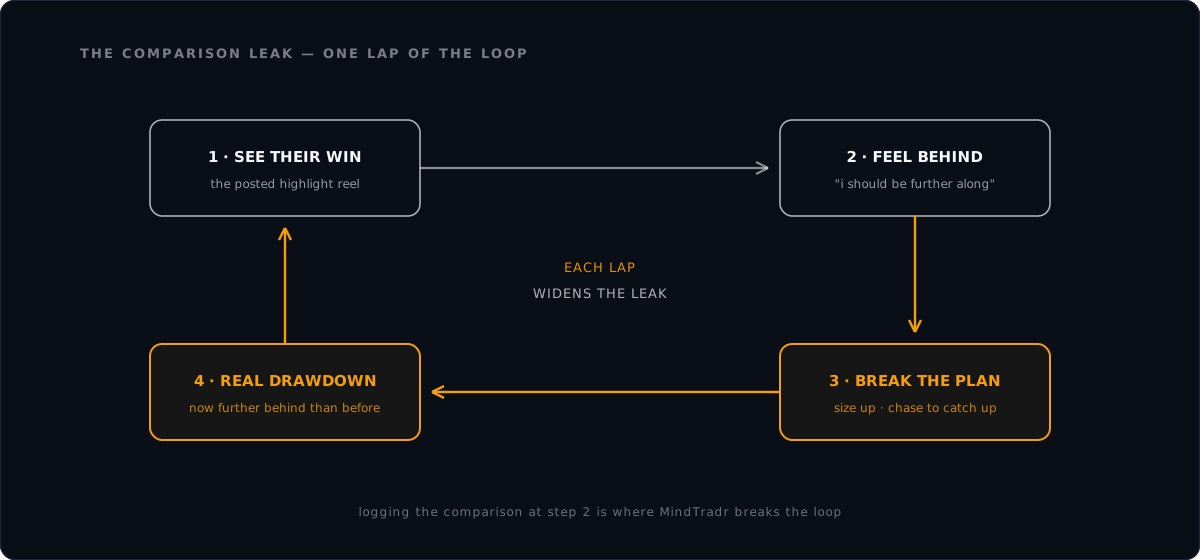
The cycle is self-reinforcing. You see the win, you feel behind, you deviate from your plan to catch up, the deviation produces a real loss — and now you're further behind, which makes the next comparison sting harder. The leak widens every lap.
Is Any Comparison Useful?
Some of it, yes — but almost never the kind you're doing on your phone.
Useful comparison is process to process: how does a consistently profitable trader prepare, size, journal, and manage risk? That's studyable. You can copy a checklist. Dr. Brett Steenbarger writes constantly that improvement comes from studying process, not envying outcomes — the trader you learn from is a template, not a scoreboard.
Useless comparison is outcome to outcome: their P&L versus your P&L. It tells you nothing you can act on, because you don't control their variables and you can't see most of them. It's pure noise dressed up as feedback.
The test is simple: does this comparison give me a next action, or just a feeling? If it produces a specific thing to try tomorrow, keep it. If it just produces a knot in your stomach and an urge to size up, it's the leak.
How to Plug the Comparison Leak
You don't beat comparison by trying to feel less of it — that's like trying to not think of a red car. You beat it by changing what you measure against. Move the benchmark from them to you.
- Benchmark against your own last 30 sessions, not anyone's feed. The only fair comparison is you-then versus you-now. Are your rules-followed days up? Is your average loss smaller? That's real progress; their week isn't your data.
- Log the comparison, don't just feel it. When you catch the "I should be further along" thought, write it down next to the trade. Naming it pulls it out of your blind spot — and after a few weeks you'll see the pattern: comparison spikes right before your worst sizing decisions.
- Separate the metric from the mood. A green day is a green day whether or not someone else had a greener one. Learning to hold that line is composure — the trading skill that actually compounds.
- Curate ruthlessly. If an account reliably makes you trade worse, muting it is risk management, not weakness. Trading with someone else's highlight reel in your peripheral vision is its own form of self-sabotage — and if that reel is a live feed you keep open during sessions, see how trading with Twitter open rewires your risk tolerance in real time.
Mark Douglas made the whole point in Trading in the Zone: consistency comes from an internal standard, not an external one. The moment your benchmark lives on someone else's timeline, you've handed them the wheel.
Trade Your Own Curve
The traders who last stop watching the leaderboard and start watching their own log. Not because they don't care about doing well — because they figured out that the fastest way to fall behind is to keep glancing at where everyone else is standing.
This is exactly the pattern MindTradr is built to surface. When you log your mood and stress alongside every trade, the comparison leak stops being invisible — you can see, in your own history, that your ugliest sizing decisions cluster on the days you spent scrolling other people's wins.
MindTradr is a trading psychology journal that tracks your mood, sleep, and stress next to your P&L — so you can catch when comparison, not your setup, is driving the trade. That link between what you felt and what you did is the whole point; it's the thing a P&L screenshot can never show you.
You will never run out of traders doing better than you on any given week. The scoreboard is infinite and rigged. Your own curve is the only one you can actually move — so trade that one. MindTradr is free to start.