
How to Trade Your Way Out of a Slump Without Making It Worse
You know the feeling before you can name it. The setups still look fine, but you're a half-second late on every entry, taking scratches you'd normally hold, second-guessing the ones you'd normally take. Nothing is blowing up — you're just off, and you've been off for two weeks.
That's a trading slump: a stretch where your rhythm is gone, your confidence is dented, and every session feels like pushing a car uphill. The danger isn't the slump itself. It's what you do trying to end it.
A Slump Is a State, Not a Number
First, don't confuse this with a drawdown. A drawdown is a number on your account — the distance between your equity peak and now. You can be in a drawdown from pure variance and feel completely fine. If your question is "is this red stretch normal noise or a broken edge?", that's a diagnostics problem, and drawdown psychology is the post you want.
A slump is different. It lives in your head and your hands, not your P&L. You can be slumping with a flat account — a run of scratches, hesitated entries, and missed moves that never showed up as a big loss but quietly wrecked your feel for the market.
The account measures money. The slump measures rhythm. They overlap, but treating a rhythm problem like a math problem is how traders reach for the wrong fix — usually a bigger size or a new system, exactly when neither is the issue.
The Two Ways Traders Dig the Hole Deeper
Watch how a slump actually ends for most people, and you'll see one of two moves — opposite on the surface, identical underneath.
- Overtrading to force the comeback. You size up, take marginal setups, and trade more often because doing something feels like progress. Every one of those is a decision made from urgency, not read — and urgency is the mechanism that turns a slump into a real drawdown. This is the same engine behind revenge trading after a loss, just stretched over weeks instead of minutes.
- Freezing until it "feels right" again. The mirror image: you stop pulling the trigger, watch clean setups run without you, and wait for confidence to magically return. It doesn't. Confidence is downstream of execution — you can't think your way back into form, you have to trade your way back, in small enough size that a loss can't scare you off again.
Both roads feel like the responsible choice in the moment. Both make the slump longer.
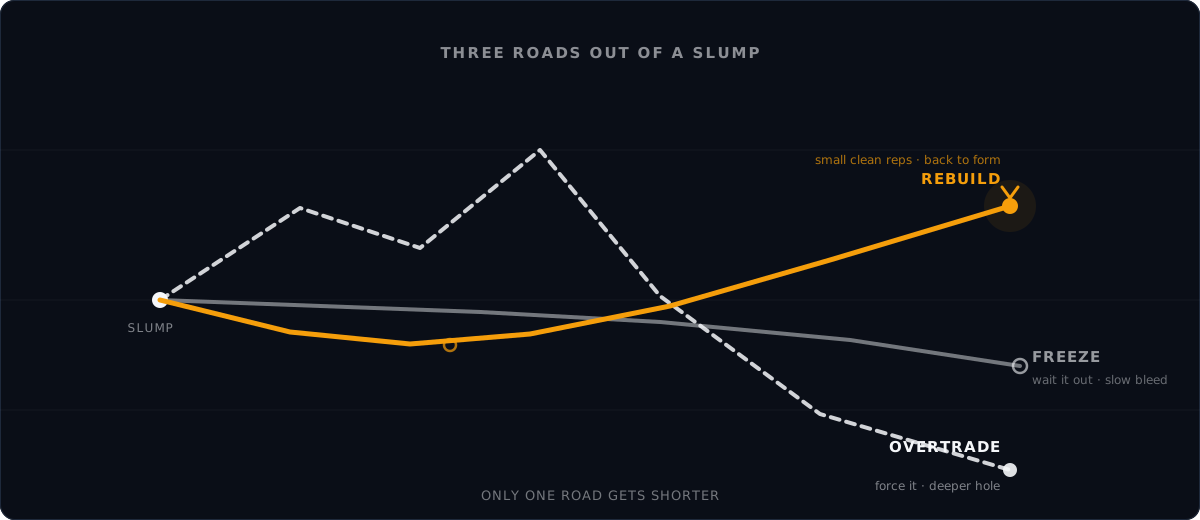
How Do You Trade Your Way Out of a Slump?
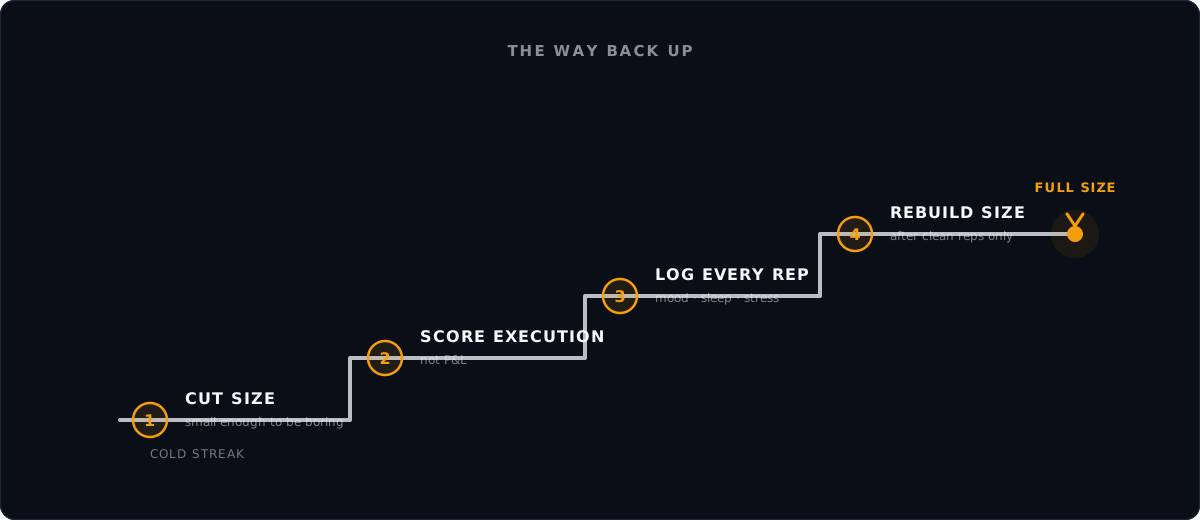
You shrink the game until winning it is easy again, then let confidence rebuild on evidence instead of hope. Concretely:
- Cut your size first, not your frequency. Drop to a fraction of normal risk — small enough that any single trade is emotionally boring. You stay in the reps and keep collecting data, but a loss can no longer deepen the hole or the fear.
- Change the scoreboard. Stop grading yourself on P&L for a stretch. Score execution: did I take the setup my plan called for, size it right, and manage it as written? A clean, rule-following losing trade is a win on this scoreboard — and that's the only scoreboard that pulls you out.
- Log every rep, especially the boring ones. A slump hides its cause in the trades you'd rather not write up. Capture your entry reason, whether you followed your rule, and your mood, sleep, and stress on each one. Patterns you can't feel mid-slump — I only break rules on under-six-hours-of-sleep days — jump out across twenty logged trades.
- Set a hard floor before the session. A predetermined daily stop, decided while you're calm, takes the worst decision out of your hands on the day the slump tempts you to "make it back." When you hit it, you're done — that's the whole point of a walk-away rule.
The state field in step three is the one traders skip and shouldn't. Most people can't even name which pressure quietly knocks them off-script — the itch to force a trade in a dead tape, the flinch after a red day, the boredom that makes marginal setups look clean. If you want to find out which pattern is costing you the most, the MindTradr quiz maps your behavior to the exact moment your discipline tends to slip.
Rebuild the Reps, Not the P&L
Here's the part that feels too slow to work: you don't size back up because you feel better. You size back up because the log shows a run of clean, rule-following reps — win or lose. Confidence built on a lucky green day evaporates on the next red one. Confidence built on evidence of good process survives contact with variance.
This is what Dr. Brett Steenbarger keeps returning to on his TraderFeed blog: recovery is deliberate practice — structured reps with feedback — not a mood you wait for. And it's why Jared Tendler's mental game work separates variance from a skill problem: a slump you treat as proof you're broken becomes a self-fulfilling spiral, while a slump you treat as a process to rebuild has a clear exit. The difference between the two is whether you have the data to tell them apart.
That data is the whole reason MindTradr logs your mood, sleep, and stress next to your P&L on every trade — so when you're in the fog of a cold streak, you can look back and see whether your process actually broke or your feel just wobbled. Do that consistently and you build composure: the capacity to meet a bad stretch with a plan instead of a reaction.
MindTradr is free to start — no credit card required. MindTradr is a psychology-first trading journal that logs your mood, sleep, and stress alongside every trade, so a slump becomes a pattern you can read and climb out of instead of a spiral you fall into.