
'I'm a Trader': When Identity Becomes a Liability
You closed the day red. Not catastrophically — a normal losing session inside a normal losing week, the kind your plan already budgets for. And yet you can't put it down. It's following you into dinner, into bed, into tomorrow's pre-market.
Here's the tell: the size of the loss doesn't match the size of the feeling. That gap is the sign that the trade stopped being about money a while ago. It became a verdict — not on the setup, but on you. That's what happens when trading identity fuses to your self-worth, and it's one of the quietest, most expensive liabilities a trader can carry.
When "I'm a Trader" Stops Being a Job and Starts Being a Self
There's a healthy version of identifying with your craft. Saying "I'm a trader" the way someone says "I'm a carpenter" — a description of what you do, backed by skill you're proud of — is fine. It gets you to the screen on the mornings you don't feel like it.
The liability shows up when the label slides from what you do to who you are. Once your sense of self is welded to your P&L, the account stops being a scoreboard and becomes a mirror. A green day means you're competent and worthy; a red day means you're a fraud who was kidding yourself. Same person, opposite verdicts, decided by variance you don't control.
Psychologists call this over-identification a form of cognitive fusion — treating a thought like "I'm a losing trader" as a literal fact about your worth rather than a passing mental event. Once fused, you can't evaluate the thought; you can only defend against it. And on a screen, defending against it costs real money.
What's the Difference Between Ego and Identity in Trading?
They rhyme, but they operate on different timescales — and confusing them means you fix the wrong one.
Ego in trading is per-trade: the need for this specific position to prove you were right, so you widen the stop and refuse to be wrong on the ticket. It flares up and dies with the trade. Identity is the layer underneath — the standing belief that your value as a person rides on your results. Ego is a spike; identity is the ground the spike grows out of.
That's why you can defuse the ego on a single trade and still feel wrecked by a losing week: the trade-level battle is over, but the self-worth is still on the line. Ego asks "am I right?" Identity asks "am I anyone if I'm not good at this?" The second question is the dangerous one, because there's no stop-loss for it.
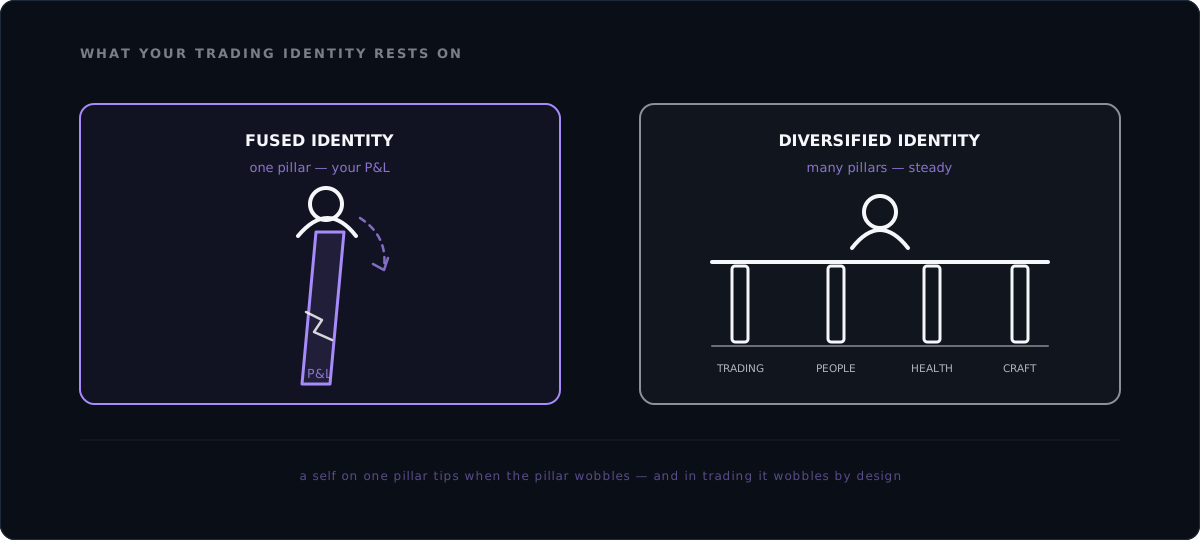
The picture is the whole argument. A self that rests on one pillar falls when that pillar wobbles — and in trading, the pillar wobbles by design. A self spread across several supports can take a drawdown without the ground giving way.
How Identity Fusion Leaks Into Your Trading
Over-identification rarely announces itself. It leaks into decisions that look like discipline problems but are really self-defense:
- You can't take a break. Stepping away — a vacation, a slow week, a day off after a loss — feels like abandoning who you are, so you overtrade thin setups just to stay "a trader" today.
- You can't stop after a loss. Quitting red feels like admitting defeat about yourself, so you keep clicking to earn back not the money but the identity. This is a direct on-ramp to trading self-sabotage.
- You hide the losing periods. You stop journaling, stop checking stats, stop telling anyone how it's going — because looking closely at the numbers means looking closely at a self you're not sure you like right now.
- You defend the label to other people. You talk up trades, round up results, and dodge the honest "how's it going" — protecting the story of the trader more than the account of the trader.
- You can't quit a broken approach. Walking away from a strategy reads as walking away from yourself, so you white-knuckle a losing method long past its expiry.
Every one of these trades the account's health for the identity's comfort. And the market only ever pays out on the first one.
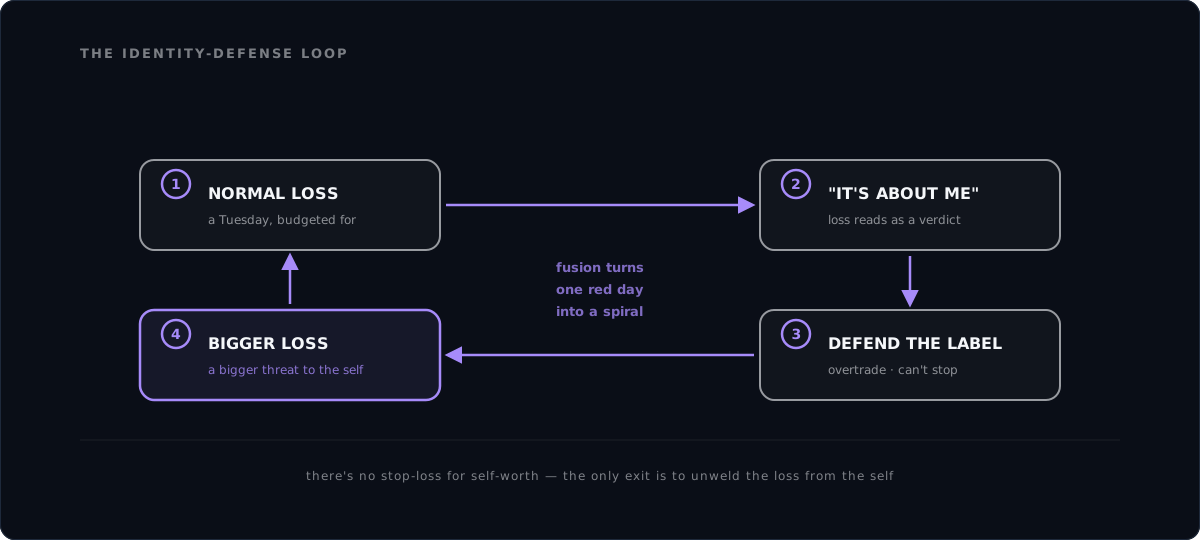
Notice the loop closes on itself. A normal loss gets read as a threat to the self, the self gets defended with more trading, the defense produces a bigger loss, and the bigger loss is a bigger threat. Fusion turns one red day into a spiral because there's no exit that doesn't feel like surrender.
How to Hold the Trader Identity Loosely
You don't fix this with more willpower or a better strategy. You fix it by loosening the weld between the results and the self — so a bad session is information, not an indictment.
- Separate the scorecards. Grade the decision (did I follow process, yes/no) apart from the outcome (P&L). A good trade that lost is still a win on the only board that compounds. This is the practical core of trading composure.
- Build a second pillar on purpose. Something you're visibly, non-negotiably good at that has nothing to do with markets. A self with more than one leg doesn't tip when one leg shakes.
- Rename the loss. It's not "I'm a losing trader." It's "this trade lost" — a single sample in a variance-heavy game. Say the specific, small version out loud; it's much harder to fuse to.
- Schedule the breaks before you need them. A pre-planned day off isn't abandoning the identity; it's proof the identity survives without a session. Take it on the calendar, not on how you feel.
- Watch your state, not just your number. The urge to defend the self spikes when you're tired, isolated, or already down. Trading coach Brett Steenbarger has argued for years on his TraderFeed blog that your emotional reactions are data about your process, not commands you have to obey.
That last point is where the tool earns its place. MindTradr is a trading psychology journal that logs your mood, sleep, and stress alongside your P&L, so the days you traded to defend your identity — rather than your edge — stop being invisible and become a pattern you can name. Over enough sessions the correlation is hard to deny: your worst holds and your refusal to stop tend to cluster on the days the self felt most on the line.
The traders who last aren't the ones who never lose. They're the ones for whom a losing day is a Tuesday, not a referendum. MindTradr is free to start, and the first thing it tends to surface is the gap between how big a loss actually was and how big it felt.