
Your First Year of Trading: Realistic Expectations
Three months in, your account is smaller than when you started, you've read more threads than you can count, and a small voice keeps asking whether everyone else figured this out faster. That voice is lying — but not about the losses. Those are real, and for most beginners in year one, they're supposed to be there.
Nobody frames the first year honestly because honesty doesn't sell a course. So here's the version without the pitch: what your first year of trading actually looks like, and where it quietly goes wrong.
What Your First Year of Trading Actually Looks Like
This isn't the "when will I finally be profitable?" question — that's a narrower timeline problem I unpack in how long it takes to become a profitable trader. Year one is the wider experience underneath that timeline: the money you'll lose learning, the emotional tells you'll discover, and the number of times you'll want to quit before anything clicks.
Picture it less like a staircase and more like a U-shaped curve. Most beginners spend the first stretch going backwards — small losses, blown setups, over-tinkering — before the line flattens and, if they last, slowly turns up. The mistake isn't the dip. The mistake is expecting a straight line and panicking when you get a curve.
Year one has three jobs, and none of them is "make money":
- Stop the bleeding. Learn to size small and survive a bad week without threatening the account.
- Meet yourself. Find out how you specifically behave when you're down, bored, or on a streak.
- Bank reps. Run one approach enough times to know whether it's you or the method that's failing.
Profit is a byproduct of doing those three well. Chase it directly and you'll skip all three.
Is It Normal to Lose Money in Your First Year?
Yes — and treating that as a defect is the first expensive mistake. The widely repeated line that most new traders lose money in their first year is uncomfortable precisely because it's roughly true. The question isn't whether you'll lose; it's whether you're paying tuition or just donating.
Tuition buys a lesson: a logged trade, a named mistake, a rule you now follow. A donation is the same loss with nothing written down and nothing changed — the same red session on loop. Mark Douglas built his whole argument in Trading in the Zone (2000) on this shift: treat each trade as one sample in a long series, and a losing year one stops feeling like a verdict and starts feeling like data collection. (For the capital side of this — how much you should risk learning on — see how much money to start trading with.)
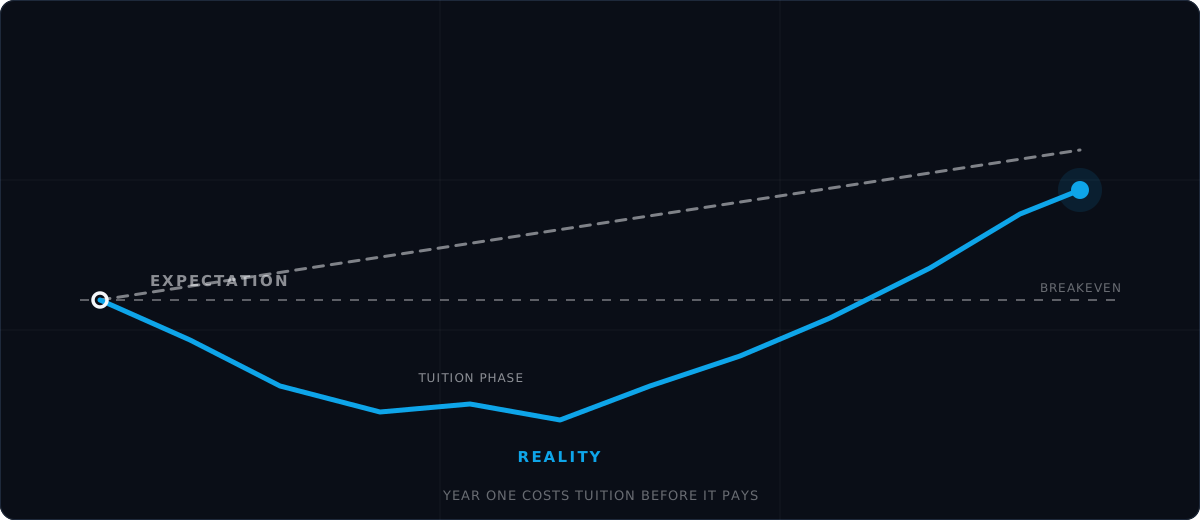
The picture is the whole point. The straight line is what you were sold. The curve is what you get — and the trough in the middle is where the tuition gets paid.
Four Things Year One Actually Teaches You
Strip away the fantasy of a hockey-stick account and here's what a real first year hands you, roughly in order:
- Survival beats profit. Before an edge can pay you, you have to still be at the table. Fixed, small risk per trade is the single skill that keeps year one from ending early. Everything else is downstream of this.
- Your emotional tells. You'll learn that you over-size after a win, freeze after a loss, or trade thin setups when you're bored. These are personal, and no course can hand them to you — you have to catch yourself doing them.
- A strategy needs reps, not tweaks. Beginners kill working systems by changing them every red week. Year one teaches the difference between "this doesn't work" and "I haven't run this enough times to know." Usually it's the second one.
- Demo lies about the hard part. Screen mechanics transfer from paper; the psychology of real money does not. Your first year on live capital is where the actual curriculum starts.
Notice none of these is a chart pattern. Year one is mostly about learning to manage the person clicking the buttons.
The Quiet Killer: Quitting Right Before the Curve Turns
Here's the trap that ends more first years than any bad strategy: people walk away at the bottom of the U. The account is at its lowest, the enthusiasm is gone, and the curve hasn't turned up yet — so quitting feels rational. It isn't. It's just the hardest point on a shape that was always going to be hard in the middle.
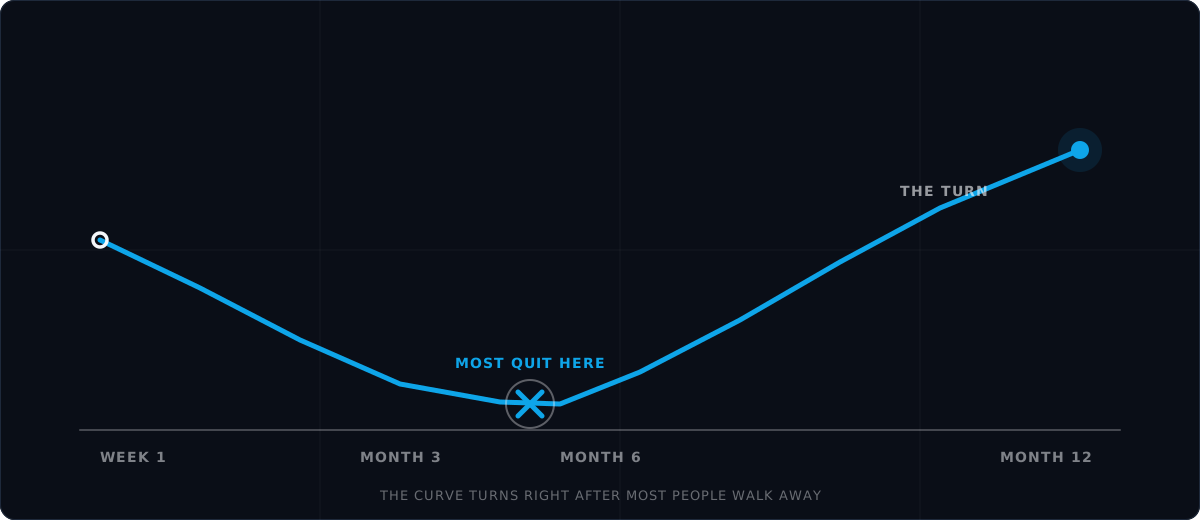
The cruel timing is that the trough and the turn sit right next to each other. The traders who make it aren't the ones who found a shortcut around the dip — they're the ones who kept logging reps through it, when nothing was rewarding them for it yet. This is where trading consistency stops being a slogan and becomes the only thing keeping you in the game.
How Do You Make Your First Year Count?
You can't shorten the curve by wanting it more, but you can make every rep teach you more — which is the only real accelerator:
- Log the reason, not just the result. Record what you saw and felt before the outcome. That's the raw material that turns a losing trade into paid tuition instead of a donation.
- Review in batches. One trade is noise. Thirty reviewed together show your actual patterns — which setups pay, which moods wreck you.
- Protect the account first. A blown balance doesn't just cost money; it costs all the reps you'd have taken with that capital. Staying in the game is the strategy.
- Track your state, not just your P&L. Your worst first-year stretches usually line up with poor sleep, high stress, or a losing streak bleeding into the next click — not with the market.
That last one is where the dip gets survivable. In MindTradr, you log your mood, sleep, and stress next to each trade, so when you review a rough month you can tell which losses were bad reads and which were your state sabotaging a good plan. It's the same composure muscle behind every stage of the climb — more on that in trading composure — and it's exactly the "your reactions are data, not commands" stance trading coach Brett Steenbarger has argued for years on his TraderFeed blog.
The traders who survive year one aren't the ones who avoided the losses. They're the ones who turned each one into a note instead of a wound — and kept showing up through the boring middle of the curve.
MindTradr is a trading psychology journal that logs your mood, sleep, and stress next to your trades, so your first year becomes a record you can learn from instead of a blur you barely survived.
If you want your first year to compound lessons instead of just draining the account, MindTradr is free to start.