
How Long Does It Take to Become a Profitable Trader? (Honest Answer)
Six months in, you're still down. Not blown-up down — just quietly, persistently in the red, wondering if the whole thing is a scam or if you're the problem. Then you hit a green month, feel like you've cracked it, and give it all back the next. The question underneath every one of those swings is the same: how long is this supposed to take?
Nobody selling a course will give you a straight answer, because the straight answer doesn't sell. So here it is, without the pitch.
The Honest Answer Nobody Wants to Hear
Most traders who make it profitable talk in years, not months — commonly one to three years of consistent effort before the equity curve tilts up and stays up. Plenty take longer. A minority never get there, which is where the widely cited "most traders fail" figure comes from.
That range is uncomfortable, so people look for a shortcut around it. This isn't a question of why people wash out — that's the psychology story I cover in why 90% of traders fail. And it isn't the how much money you need to start capital question either. It's also narrower than the wider "what will the ride actually feel like" picture, which I map out in your first year of trading. This one is tighter: assuming you don't quit and you don't blow up, how long does the skill itself take to build? The answer is measured in reps, and reps take calendar time you can't compress by wanting it more.
How Long Does It Take to Become a Profitable Trader?
Long enough to see your setup play out across hundreds of trades and several market regimes — trending, chopping, quiet, violent. That's the real unit: not months elapsed, but occurrences survived with your process intact.
Brett Steenbarger, who has coached professional traders for decades, frames skill development as deliberate practice on his TraderFeed blog: structured repetition with feedback, not just screen time. Two traders can both log a year. The one who reviewed every trade, tagged their mistakes, and adjusted is years ahead of the one who just clicked and hoped. Time in the market and time spent learning are not the same clock.
That's why the number varies so wildly between people. It isn't talent. It's how much signal each trader extracts per trade.
Why the Timeline Varies So Much
Two beginners start the same week and finish years apart. The gap almost always comes down to a handful of accelerators — or the lack of them:
- Screen time per week. Someone watching the market four hours a day gathers reps faster than someone who catches an hour after work. The trader with a full-time job isn't worse — they're just accumulating occurrences more slowly.
- Quality of feedback. A journal that captures why you entered, not just the P&L, turns each trade into a lesson. Without it, you repeat the same session on loop with no learning attached.
- Emotional interference. If every drawdown triggers revenge sizing or a strategy switch, you're not compounding a skill — you're resetting the clock. Composure is what lets the reps actually stack.
- Starting on demo vs. live. Screen skills transfer; the psychology of real money does not. Time on a demo builds mechanics but postpones the hardest part of the curve.
None of these change the destination. They change the slope of the line getting there.
The Milestones That Actually Matter
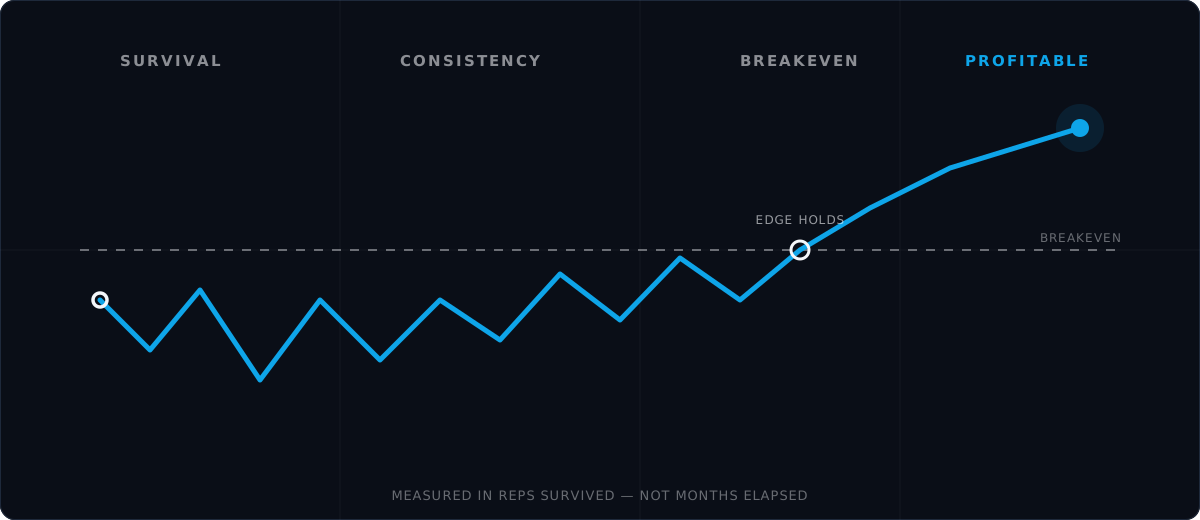
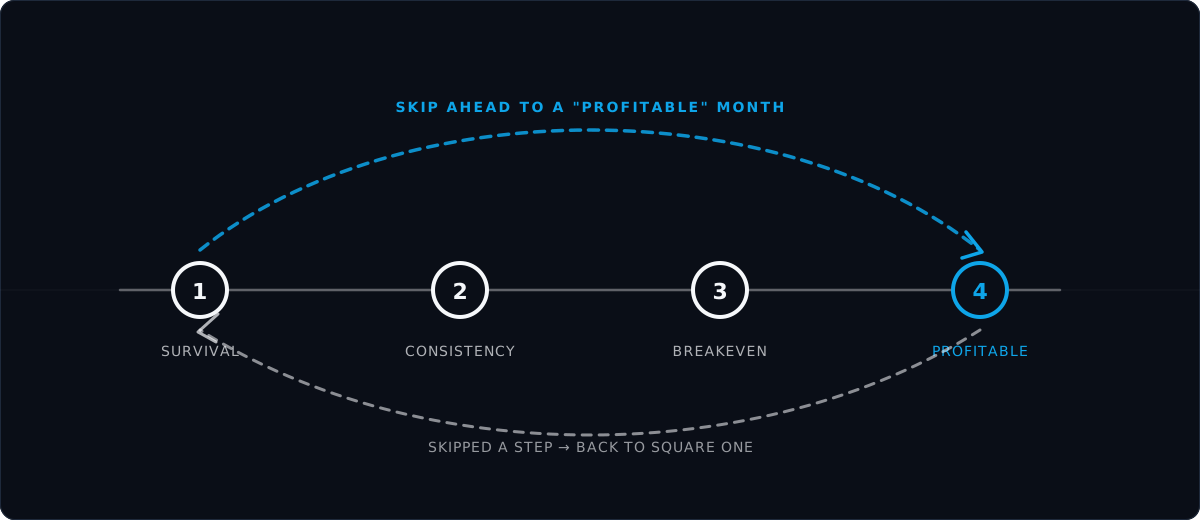
Stop counting months. The curve isn't a calendar — it's a sequence of thresholds, and you can be "one year in" while sitting anywhere on it. Roughly in order:
- Survival. You stop blowing up accounts. Risk per trade is fixed and small, and a bad day no longer threatens the whole balance. Most people underestimate how long just this takes.
- Consistency. Your results stop being random. Win or lose, you're running the same process every session — the trait that separates the traders who last, which I dig into in trading consistency.
- Breakeven. Fees and losers roughly cancel your winners. This feels like failure and is actually a huge milestone — it means your edge and your execution are finally in the same room.
- Profitability. The curve tilts up and stays up across different market conditions, not just a hot streak. This is the one everyone wants to rush to, and it's the last to arrive.
Hitting these out of order — being "profitable" for a month before you've mastered survival — is exactly the trap that resets so many traders back to step one.
How to Shorten the Curve
You can't skip the reps, but you can make each one count for more. That's the only real accelerator:
- Log the reason, not just the result. Record what you saw, what you felt, and why you clicked — before you know the outcome. That's the raw material of deliberate practice.
- Review in batches. One trade is noise. Thirty trades reviewed together show you your actual patterns — which setups pay, which emotional states wreck you.
- Protect your composure first. A blown account doesn't just cost money; it costs all the reps you'd have taken with that capital. Staying in the game is the strategy.
- Track state alongside P&L. Your worst stretches usually correlate with poor sleep, high stress, or a losing streak bleeding into the next click — not with the market.
That last one is where the curve quietly speeds up. In MindTradr, you log your mood, sleep, and stress next to each trade, so when you review a month of reps you can see which losses were bad reads and which were your state screwing up a good plan. It's the same composure muscle behind every stage of the climb (more on that in trading composure) — and it's the mechanism Mark Douglas builds his whole argument on in Trading in the Zone (2000): consistency comes from treating each trade as one sample in a long series, which is exactly the mindset the learning curve demands.
The traders who get there fastest aren't the ones who found a shortcut. They're the ones who stopped asking how long it takes and started making every trade teach them something.
MindTradr is a trading psychology journal that logs your mood, sleep, and stress next to your trades, so you can turn each session into a rep that actually moves you along the learning curve.
If you want every trade to count toward becoming profitable instead of just passing the time, MindTradr is free to start.