
Why You Never Withdraw Profits (And Why You Should)
The number on your dashboard has never been higher. You've had a good stretch — the account is up, the equity curve looks like something you'd screenshot. And in your actual bank account? Nothing has moved. Not a single dollar has left the platform.
Ask most self-directed traders when they last withdrew profits and you'll get a blank look, or some version of "why would I — I'm compounding." Never withdrawing profits is one of the most common and least examined habits in retail trading, and it quietly turns years of real gains into a number you can hand back overnight.
This isn't about cutting winners short — that's exiting a single trade before your target, a trade-management problem measured in minutes. This is the opposite scale: the account grows for months, you never take anything out, and one drawdown erases gains you technically "made" but never actually kept.
Why You Never Withdraw Profits
The refusal to withdraw is rarely a considered financial decision. It's a stack of quiet emotional defaults you've never said out loud:
- It doesn't feel like real money. The balance reads like a score, not a paycheck. Moving it to your bank would make it real — and realizing something means it can no longer grow.
- Withdrawing feels like quitting. Pulling money out reads, internally, as a lack of faith in your own edge. A "real trader" lets it ride.
- You're anchored to the peak. Once you've seen the account at its high, taking money out feels like walking backward from a number you've already claimed as yours.
- The next milestone is always the reason. Five figures becomes six. Six becomes "just a bit more." There's never a natural stopping point to press withdraw.
None of these are about the market. They're about how your brain files the money — and that filing system is the whole problem.
The Two Accounts Your Brain Keeps
Economist Richard Thaler won a Nobel Prize partly for describing mental accounting — the way we sort money into separate mental buckets and treat each bucket by different rules, even though a dollar is a dollar. Your trading equity and your spendable cash live in two different buckets, and your brain will not let them touch.
Screen equity gets filed as points in a game you're winning. Bank money gets filed as real. Withdrawing means moving a dollar from the exciting bucket to the boring one — and it registers as a loss of progress even though your net worth hasn't changed at all.
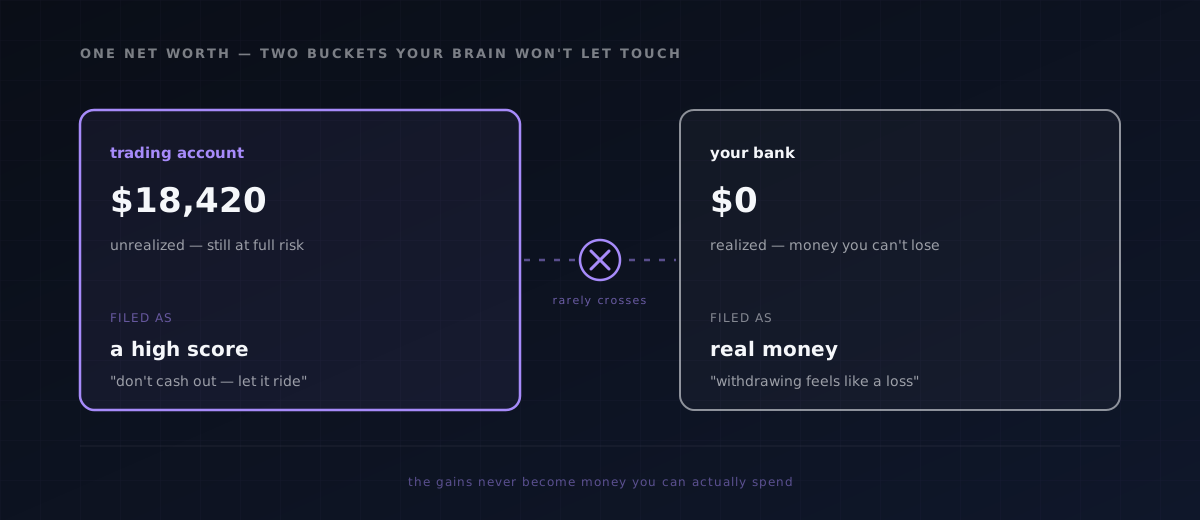
The trap is that the "exciting bucket" is also the only one exposed to full market risk. As long as the gains sit there, they aren't yours in any meaningful sense — they're a loan the market can call at any time. Unrealized profit is a story about the past, not money in the present.
Isn't Withdrawing Profits Just Killing Your Compounding?
This is the objection every trader reaches for, and it deserves a straight answer: yes, compounding is real, and yes, money you withdraw stops compounding. But the argument has three holes.
First, you can't compound what you give back. Compounding only works on capital that survives. A gain you never realized and then lost in a drawdown compounded exactly nothing — it just felt like it did for a while.
Second, a modest withdrawal rate barely touches the curve. Pulling a small slice of profit — not principal — while leaving the base to keep working costs you very little in long-run growth and buys you an enormous amount of psychological stability. You're not liquidating the engine; you're taking the exhaust.
Third, compounding is a strategy, not an identity. If "I'm compounding" is really cover for "I can't bring myself to press withdraw," then it's not a plan — it's the same avoidance dressed up as discipline. The same honesty applies here as to scaling up an account: name what you're actually doing before you defend it.
What Withdrawing Profits Actually Does for Your Psychology
Paying yourself changes how the whole account feels to trade — and that shows up in your decisions.
When you convert a portion of gains into real, un-loseable money, three things happen. The stakes on the remaining balance drop, so a normal drawdown stops feeling like an existential threat. The abstract scoreboard becomes a concrete result you can point to — proof the process works, which does more for drawdown psychology than any pep talk. And the job finally starts to resemble a job: work in, money out, on a schedule.
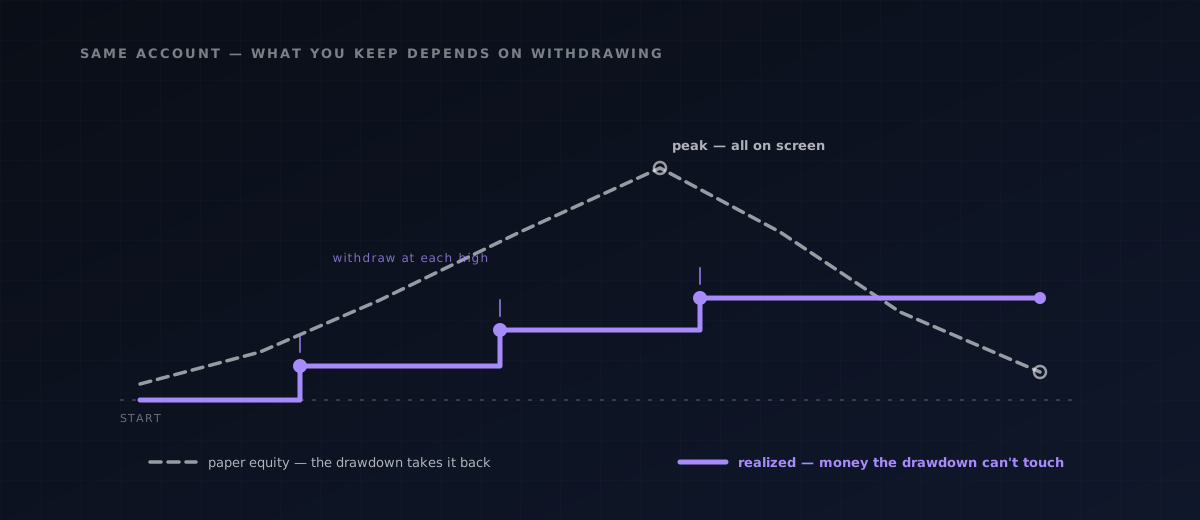
This is the same lesson funded traders learn the hard way when they finally collect that first payout: the money isn't real until it leaves the platform, and treating a withdrawal as a milestone rather than a retreat is what separates a sustainable practice from a high score you eventually surrender. Trading coach Brett Steenbarger, who has spent a career studying elite performers, writes at TraderFeed that the traders who last are the ones who build the business around themselves, not the ones who chase an ever-higher number on the screen.
How to Build a Withdrawal Habit
Willpower won't do it — the pull to leave it all in is too strong in the moment. You need a rule that decides for you when you're calm.
- Set a fixed withdrawal rule. Pick a percentage of monthly profit — say, a quarter — and pull it on a set date regardless of how you feel about the account that week. A number chosen cold holds far better than one you negotiate mid-month.
- Withdraw profit, never principal. Define your working capital and leave it untouched. You're skimming gains, not shrinking the engine.
- Track realized separately. Keep a running total of money that has actually reached your bank. That figure — not the platform balance — is your real scorecard.
- Start embarrassingly small. Even a token withdrawal breaks the "it never leaves" pattern and teaches your brain that realizing gains is normal, not a betrayal.
- Log how it feels. Note your state when you withdraw and when you don't. The resistance itself is data about your relationship with the money.
That last point is where the habit connects to everything else. MindTradr is a trading psychology journal that logs your mood, sleep, and stress alongside your P&L, so patterns like "I refuse to withdraw the month I feel behind" stop being invisible and start being something you can see and manage. Composure isn't only about how you enter trades — it's about whether you can let the gains become real.
You don't have to choose between growing an account and actually living off it. Withdraw a slice on a schedule, protect the base, and the number on the screen finally starts paying you back. MindTradr is free to start, and the first pattern it tends to surface is the gap between what your account has earned and what you've ever allowed yourself to keep.